

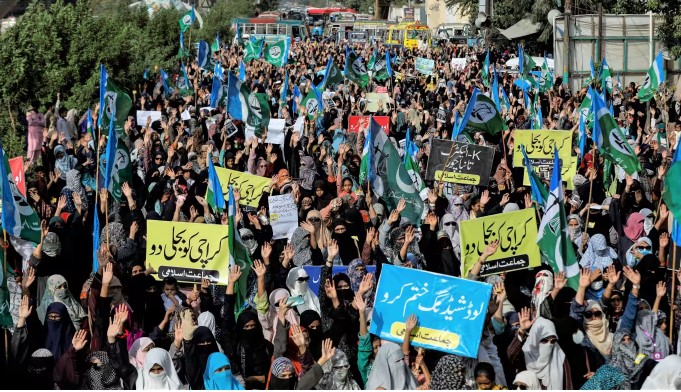

Pakistan is grappling with escalating public discontent over soaring electricity bills, exacerbated by commitments to the International Monetary Fund (IMF) that limit the caretaker government’s ability to provide relief. This crisis has triggered nationwide protests and a shutdown strike by business owners, highlighting the severe impact of high electricity tariffs and taxes on the population.
The Crisis Unfolds
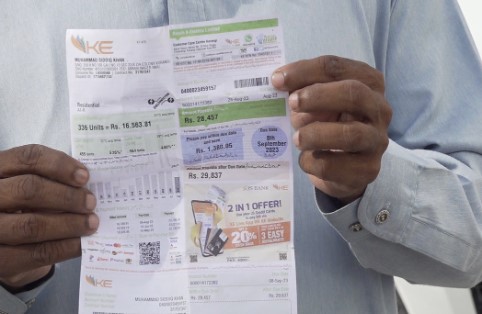
In the third week of August, Pakistani consumers were hit with their electricity bills for July, revealing staggering increases of 100% to 200%. This rate surge, which typically accounts for 15% to 20% of a household’s income, has pushed many to their breaking point.
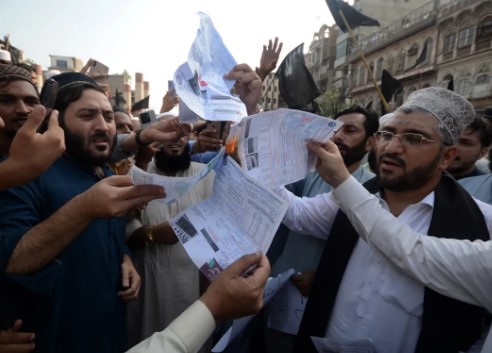
Voices from the Ground Due Electricity Bills
Madeeha Sami, a single mother residing in Islamabad, received a bill of 43,000 rupees ($140) for her modest two-bedroom apartment. “I barely make ends meet in my monthly salary, and the 200% increase in [the electricity bill] has completely disrupted life for us,” she shared with Nikkei Asia. Each and every citizen of Pakistan is hit by these unjustified electricity bills.
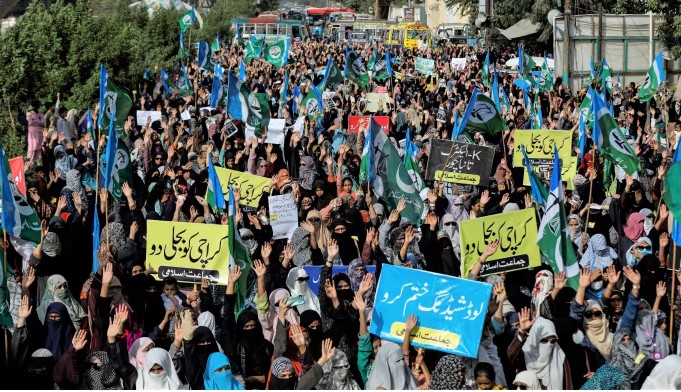
The situation has sparked widespread protests across major cities like Karachi, Lahore, Peshawar, and Quetta. Thousands have taken to the streets, and in a tragic turn, multiple reports have surfaced of individuals taking their own lives due to unaffordable charges.
Government’s Response
The new Govt, who recently took office, faces a daunting challenge. After taking Govt after a controversial election.
They claimed 300 units free during their election campaign, but they failed to implement rather than give relief to Pakistan’s People.
The IMF Agreement and IPP History
Pakistan’s plight is tied to the $3 billion standby arrangement with the IMF, designed to avert a debt default. This agreement requires the government to impose taxes on electricity and eliminate subsidies to strengthen the country’s finances. The previous administration under Prime Minister Shehbaz Sharif implemented several price hikes to counter the rupee’s devaluation. The impact is now most severe during peak summer consumption, with the caretaker government unable to offer relief without IMF approval.
Adding to the complexity is the role of Independent Power Producers (IPPs). Established in the 1990s to address power shortages, IPPs have become a significant part of Pakistan’s energy mix. However, long-term contracts and high guaranteed returns have contributed to the current high costs of electricity.
The Push for Solar Energy
In a bid to address the energy crisis, the government has proposed increasing the adoption of solar power. However, this move has raised eyebrows, with critics pointing out potential conflicts of interest. It is alleged that the push for solar energy aligns with the business interests of certain influential families, who stand to benefit from selling solar systems. To make solar power more attractive, the government might intentionally keep electricity from traditional sources expensive, exacerbating the burden on the average citizen.
The Path Forward
Pakistan’s energy crisis highlights the urgent need for a sustainable and equitable solution. While transitioning to renewable energy is a positive step, it must be done transparently and fairly. The government must address the structural issues within the power sector, including revisiting the terms with IPPs and ensuring that any shift towards solar energy genuinely benefits the public rather than a select few.
For a more in-depth analysis of Pakistan’s energy policies, you can visit Energy Update. To stay updated on global energy trends, check out the International Energy Agency.
For further info please log in to blogy365.com



Leave a Comment