


Imagine opening a map printed 300 years ago and discovering the name of a vast region that no longer appears on modern maps.
Across parts of Europe and Asia, old maps once displayed a mysterious name: Tartary, or Tartaria.
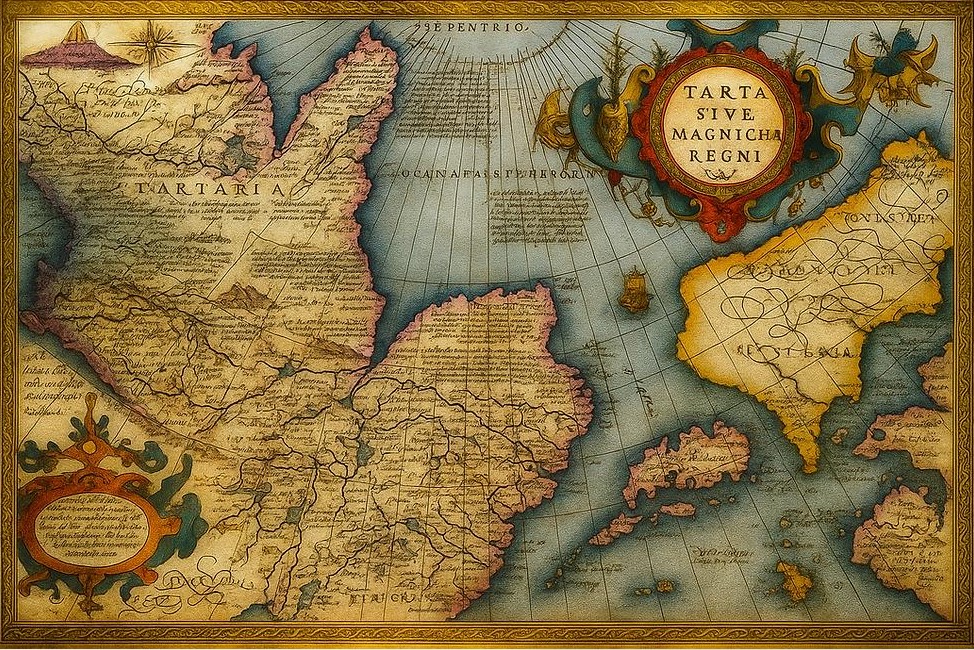
Today, the name has become the center of one of the Internet’s most fascinating historical debates. Some people believe Tartaria was once a powerful, technologically advanced civilization whose achievements were deliberately removed from history. Others argue that the mystery comes from misunderstandings of old maps, historical geography, and architectural records.
But what actually happened?
Was Tartaria a forgotten empire? Was its history deliberately suppressed? Or are we looking at a real historical name that has been transformed into a modern mystery?
The answers are more interesting than a simple conspiracy theory.
What Was Tartaria? The Name That Appeared on Ancient Maps
Tartaria was a geographical name frequently used by European cartographers between the medieval period and the nineteenth century.
It generally referred to enormous areas of northern and central Asia, including territories associated with Siberia, Mongolia, Manchuria, and parts of Central Asia.
The name was connected to the Tatars, a collection of primarily Turkic peoples living across Eastern Europe and northern Asia.
According to the Library of Congress, the word Tartary appeared on European and American maps from approximately the thirteenth to nineteenth centuries.
However, there is an important historical distinction.
Tartaria did not necessarily represent one unified country, government, or empire. Different mapmakers used the term to describe different geographical areas.
This is one of the biggest reasons the subject remains confusing today.
Historical source: Library of Congress: Tracking Tartary on Western Maps
Why Did Old Maps Show Such a Vast Territory Called Tartaria?
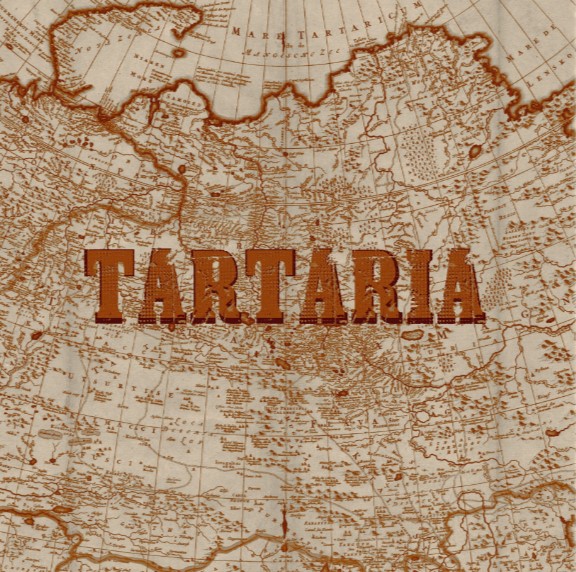
One of the most fascinating aspects of Tartaria is the way its geographical boundaries changed across historical maps.
In some maps, Tartaria covered enormous portions of northern Asia. In others, cartographers divided it into several smaller regions.
Historical maps included names such as:
- Western Tartary
- Eastern Tartary
- Chinese Tartary
- Independent Tartary
- Muscovite Tartary
A particularly interesting example is Abraham Ortelius’s 1570 map, which featured a large geographical area identified as Tartaria.
Another example is a 1757 map titled Carte de Tartarie, which displayed several different Tartarian regions.
These maps are genuine historical documents. Anyone can explore their history through the collections of the Library of Congress and other historical archives.
But the existence of these geographical labels does not automatically prove the existence of a single global Tartarian empire.
The Architecture Mystery: Who Built These Magnificent Buildings?
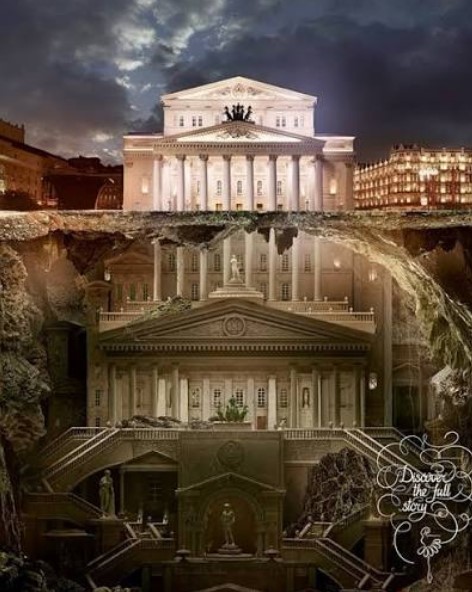
Perhaps the most visually fascinating part of the modern Tartaria discussion involves historical architecture.
Across different countries, people have discovered photographs of enormous buildings featuring:
- Massive stone columns
- Elaborate domes
- Decorative facades
- Grand staircases
- Beautifully designed public halls
- Extraordinary architectural details
Some online researchers argue that these structures demonstrate the existence of an advanced civilization whose engineering knowledge has disappeared.
They question how nineteenth-century societies could construct such impressive buildings without modern machinery.
This is an interesting question, but extraordinary architecture is not evidence of an unknown civilization by itself.
Historical architecture developed through generations of engineering knowledge, skilled craftsmanship, architectural movements, and large construction projects.
For example, the Queen Victoria Building in Sydney has a documented construction history. Its original construction began in the 1890s, and contemporary records identify the architects and development process.
The Australian Associated Press has investigated claims connecting historical Australian buildings to Tartaria and found no credible evidence supporting those claims.
Further reading: AAP FactCheck: Ancient Empire’s Link to Historic Buildings Is a Delusion
The Mud Flood Theory: Was an Advanced Civilization Destroyed?
Another major part of the Tartaria mystery is the so called Mud Flood Theory.
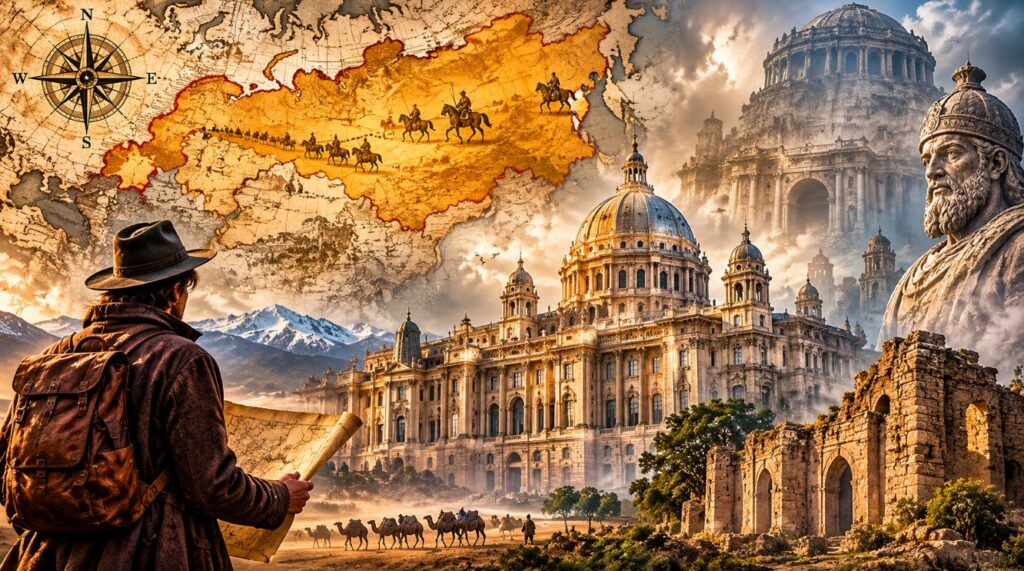
According to this internet theory, a catastrophic event allegedly buried large portions of an advanced civilization during the eighteenth or nineteenth century.
Supporters frequently point to old photographs showing buildings with windows partially below modern street levels.
They argue that these structures were buried following a massive disaster and that the surviving buildings were later incorporated into newer cities.
The theory has generated considerable discussion online.
However, there is no reliable archaeological or geological evidence establishing a worldwide mud flood that destroyed a technologically advanced Tartarian civilization.
There are conventional explanations for many buried or partially covered building levels, including changes in street elevations, urban redevelopment, basement construction, and accumulated building alterations.
It is important to distinguish genuine historical urban changes from claims that have not been demonstrated.
Why Did Tartaria Disappear From Modern Maps?
Here is where the historical record becomes particularly interesting.
Tartaria gradually disappeared from European maps because geographical knowledge improved.
As explorers, diplomats, traders, and geographers gathered more accurate information about Asia, older broad geographical labels became less useful.
Regions previously grouped under Tartaria were increasingly identified by more specific geographical, cultural, and political names.
These included:
- Siberia
- Mongolia
- Manchuria
- Turkestan
- Territories within the Russian and Chinese empires
By the late nineteenth century, the general term Tartary had largely disappeared from modern geographical usage.
The Library of Congress documents this transition through historical maps, including an 1885 map of Central Asia.
Even the Great Wall of China also seems to protect Tartaria beside China
This does not mean that the people associated with the name disappeared. Tatar communities continue to exist today, including in Russia, Ukraine, and Central Asia.
The Republic of Tatarstan, within the Russian Federation, is one modern example of a region retaining the Tatar name.
Was Tartaria Deliberately Erased From History?
This is the central question behind the entire debate.
There is a difference between saying that a historical geographical name disappeared and claiming that an entire advanced civilization was deliberately erased.
The first statement is supported by historical cartography.
The second requires much stronger evidence.
To establish the existence of a global civilization, historians would expect to find multiple independent forms of evidence, including:
- Archaeological settlements and excavation records.
- Written documents from different societies.
- Consistent evidence of trade and political relationships.
- Technological objects with verifiable historical dates.
- Construction records connecting the alleged civilization to its buildings.
So far, credible archaeological and documentary research has not established the existence of the global Tartarian civilization described in online theories.
That does not mean every question about historical architecture, forgotten communities, or poorly documented regions has been answered.
It means that historical conclusions must follow evidence rather than speculation.
Why Is the Tartaria Mystery So Popular Today?
The modern fascination with Tartaria tells us something important about how people consume history.
People are naturally curious about unexplained photographs, forgotten maps, magnificent buildings, and stories that challenge familiar historical narratives.
Social media has brought together thousands of people who share old photographs, compare architectural styles, and examine historical documents.
Some discussions raise worthwhile questions about overlooked history.
Others turn incomplete information into conclusions that cannot be supported by evidence.
The best approach is neither to accept every theory nor to dismiss every question.
Instead, examine original documents, compare historical sources, and look for independent evidence.
The Forgotten History of the Tatars Deserves More Attention
One aspect of the Tartaria debate deserves particular recognition.
The real history of the Tatar peoples should not be overshadowed by arguments about an unproven global empire.
Tatars have a long and significant history involving trade, migration, political organizations, cultural exchange, and the development of societies across Eurasia.
The Mongol Empire, the Golden Horde, the Crimean Khanate, and the Kazan Khanate are all important subjects in the broader history of the region.
These are genuine historical topics supported by documentary and archaeological research.
Perhaps the more valuable question is not whether a mysterious worldwide civilization was erased, but why the histories of so many Central Asian communities remain unfamiliar to much of the modern world.
Final Thoughts: History Is Bigger Than What We Already Know
Was Tartaria a forgotten civilization deliberately removed from history?
The available evidence does not establish that claim.
What we can establish is that Tartary was a genuine historical geographical term used for centuries. Its boundaries changed across maps, and its use declined as geographical knowledge became more precise.
The real history of the Tatars and the wider Eurasian region remains rich, complex, and worth exploring.
History should never be treated as a collection of unquestionable stories. It should be investigated through evidence, original records, archaeology, and open discussion.
Sometimes, the greatest historical mystery is not what disappeared, but how we came to misunderstand what was actually there.
What do you think? Was Tartaria simply an old geographical name, or are there historical questions that deserve further investigation?
Share your thoughts in the comments with blogy365.com



Leave a Comment