

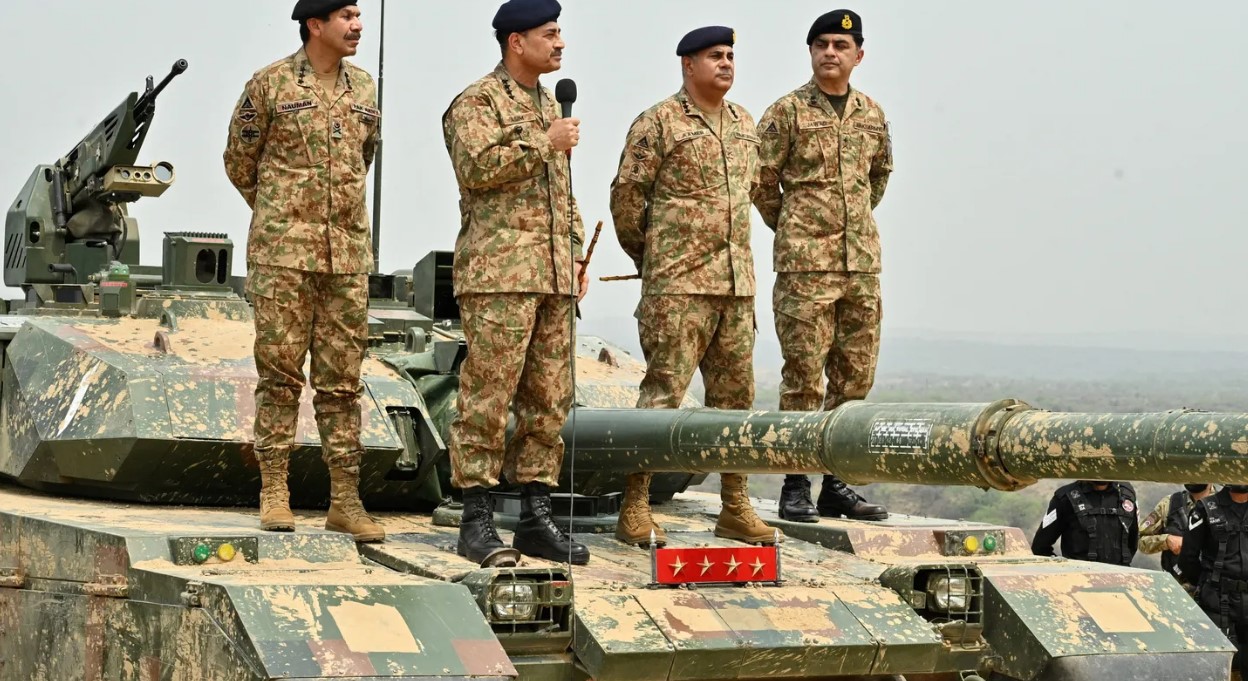

The simmering rivalry between India and Pakistan has erupted into a dangerous war of words, with both nations trading provocative threats that raise the specter of a catastrophic nuclear conflict. Pakistan’s military has issued a hard response to India’s recent statements, warning that any misstep by India will be met with an unforgiving retaliation that could erase India from the world map. As a Stanford-level strategist and SEO expert, I analyze the escalating tensions, their implications, and the urgent need for de-escalation in this high-stakes geopolitical crisis. Let’s dive into the details of this alarming standoff.
👉 Read India’s statement covered by The Hindu
👉 Pakistan’s full response from ISPR press release
🔔 Pakistan’s Fierce Retort to India’s Provocations 🔔
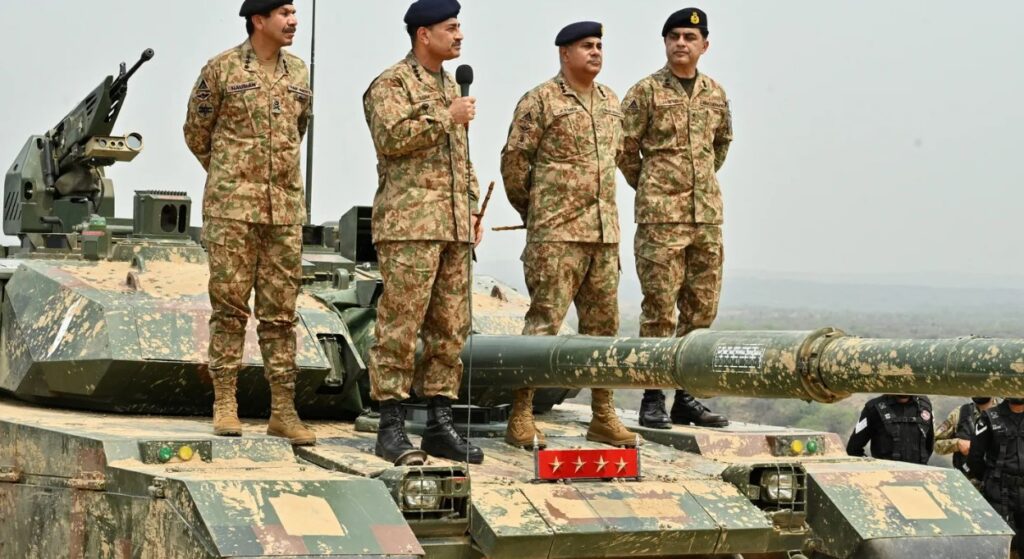
On Saturday, Pakistan’s military delivered a blistering statement in response to what it described as “delusional, provocative, and jingoistic” remarks from Indian leadership. The statement followed Indian Army Chief General Upendra Dwivedi’s warning that Pakistan must stop supporting terrorism or risk losing its place on the global stage, with Indian forces prepared to act without restraint in future conflicts. Pakistan’s military hit back hard, declaring that it will not forgive any Indian aggression and warning that “the world will struggle to find India on the map” if New Delhi dares to provoke a conflict.
The Pakistani response was unequivocal: “In the face of highly provocative statements, we caution that a future conflict will lead to cataclysmic devastation. If India triggers a fresh round of hostilities, Pakistan shall not hold back. We will respond with unrelenting force, without qualms or restraint, shattering the myth of India’s geographic immunity by targeting every nook and corner of its territory.” This stark warning underscores Pakistan’s resolve and nuclear capability, with an estimated 165 warheads according to the Stockholm International Peace Research Institute
Pakistan’s response of May’2025
🔥 India’s Defense Minister Fuels the Fire 🔥
The escalation was sparked by Indian Defence Minister Rajnath Singh’s remarks on Thursday, targeting the disputed Sir Creek region, a 96-km tidal estuary between India’s Gujarat and Pakistan’s Sindh province. Singh warned that any “misadventure” by Pakistan in Sir Creek would face a “strong and decisive” response capable of altering “both history and geography.” This bold statement, laden with territorial implications, has been perceived by Pakistan as a direct threat to its sovereignty, prompting its fierce retaliation.

The Sir Creek dispute remains a volatile flashpoint in India-Pakistan relations, with strategic importance due to its maritime boundaries and potential energy resources. For a deeper dive into this issue, check out The Diplomat, which offers a detailed analysis of South Asian geopolitics.
💥 Recent Clashes and a Fragile Truce 💥
The current tensions build on a recent clash in May 2025, triggered by an April 22 attack on the Pahalgam tourist resort in India-administered Kashmir. India blamed Pakistan-based militants, a claim Islamabad rejected, calling for a neutral investigation. In response, India launched “Operation Sindoor,” targeting sites in Pakistan, which countered with “Operation Bunyanun Marsoos.” The four-day exchange of aerial attacks ended only after U.S. President Donald Trump brokered a truce on May 10.
This brief but intense conflict highlights the fragility of peace in the region, with the Kashmir dispute remaining a core driver of hostility since the 1947 partition. For more context on the Kashmir issue, visit BBC News for comprehensive coverage.
🌍 The Nuclear Stakes: A Global Concern 🌍
The stakes are monumental. Both India (with ~160 nuclear warheads) and Pakistan (~165 warheads) possess formidable nuclear arsenals, and their rhetoric suggests a readiness to escalate beyond conventional warfare. Pakistan’s chilling warning that India could vanish from the world map if provoked underscores the catastrophic potential of a nuclear exchange. Experts at the Council on Foreign Relations warn that such a conflict could result in millions of casualties, environmental devastation, and global economic disruption, particularly given the strategic importance of the Indian Ocean.
The international community, including the U.S., China, and other powers, has a vested interest in preventing escalation. A conflict could disrupt global trade routes and energy markets, amplifying the need for urgent diplomatic intervention.
🛑 De-Escalation: The Only Path Forward 🛑
De-escalation is not just preferable, it’s essential. Both nations must step back from the brink and prioritize diplomacy. Confidence-building measures, such as resuming backchannel talks or engaging through multilateral platforms like the United Nations, could help defuse tensions. Civil society and Track II diplomacy, as highlighted by The Asia Foundation, have historically played a role in easing India-Pakistan tensions.
Pakistan must address India’s concerns about cross-border terrorism transparently, while India should avoid inflammatory rhetoric that fuels nationalist fervor at the expense of regional stability. Global mediators, including the U.S. and China, could facilitate dialogue on contentious issues like Sir Creek and Kashmir to prevent further escalation.
📢 Conclusion: Averting Catastrophe 📢
The escalating rhetoric between India and Pakistan, punctuated by Pakistan’s stark warning that India could be wiped off the map, is a sobering reminder of the dangers in South Asia. With nuclear arsenals, disputed territories, and a history of conflict, both nations must exercise restraint to avoid catastrophic consequences. The international community and regional stakeholders must rally to promote dialogue and de-escalation. The cost of failure is unimaginable.
Stay informed on South Asian geopolitics with trusted sources like Foreign Affairs for expert insights into global security dynamics.
For further insights, keep visiting blogy365.com



Leave a Comment