



There is a quiet moment that millions of Muslims experience every day.
Water touches the hands. The mouth is rinsed. The nose is washed. The face is refreshed. The arms and feet are washed. Then a person stands for prayer.
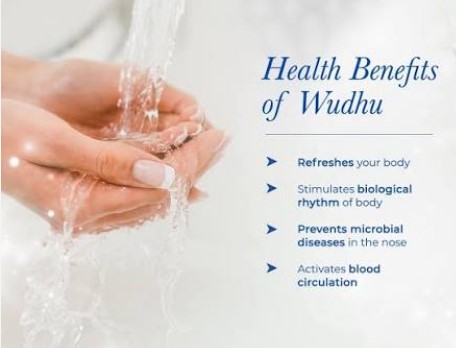
This simple act is known as Wudu, the Islamic ritual of ablution.
For Muslims, Wudu is much more than ordinary washing. It is an act of purification and preparation for Salah. The Quran explicitly connects ablution with purification, while Islamic teachings describe its method and practice in detail.
But an interesting question has emerged in the modern age.
Does Wudu also have measurable physical or hygienic benefits?
Science cannot prove the spiritual dimension of worship because spiritual belief is not something a clinical trial can measure. However, some individual practices involved in Wudu overlap with basic hygiene principles, and researchers have investigated particular aspects of ablution.
Here is what the evidence actually tells us.
What Is Wudu and Why Do Muslims Perform It?
Wudu is the ritual purification performed before Salah in circumstances where ablution is required.

The Quran describes washing the face and arms, wiping the head and washing the feet before prayer. It also explains alternatives when water cannot be used.
The purpose is not simply physical cleanliness.
Wudu prepares a Muslim physically and spiritually for prayer.
That distinction matters.
Modern hygiene focuses on reducing dirt, microorganisms and potential exposure to pathogens. Wudu has a religious purpose that includes purification before worship.
The physical actions may overlap with hygiene, but the religious meaning goes considerably deeper.
Washing the Hands: A Simple but Important Hygiene Practice
Hands interact with almost everything around us.

Doors, phones, keyboards, money, food, public surfaces and countless other objects can come into contact with our hands throughout the day.
Washing the hands regularly can therefore be an important part of personal hygiene.
Wudu includes washing the hands at the beginning of the ablution process.
From a scientific perspective, the important principle is straightforward:
Removing contaminants from the hands with water can contribute to personal cleanliness.
However, Wudu should not be presented as a replacement for proper handwashing when someone has visibly dirty hands or has been exposed to infectious material.
For those situations, established hand hygiene practices remain important.
Rinsing the Mouth and Oral Hygiene
Another part of traditional ablution involves rinsing the mouth.
This is particularly interesting because the mouth contains a large and diverse microbial community.
Regular oral hygiene is important for maintaining healthy teeth and gums. Brushing with fluoride toothpaste and cleaning between teeth remain the foundation of modern dental care.
Rinsing the mouth with water can help physically remove some loose food particles and debris.
But there is an important scientific distinction.
Water rinsing is not equivalent to brushing with fluoride toothpaste.
So it would be inaccurate to claim that Wudu alone prevents cavities or replaces professional dental care.
The more defensible conclusion is that oral rinsing can complement ordinary hygiene.
The Nose and One of the Most Interesting Scientific Findings
This is where the scientific discussion becomes particularly interesting.
Nasal rinsing is part of the traditional practice of Wudu.
Researchers have specifically studied nasal rinsing during ablution among Muslim pilgrims.
A pilot study involving male Hajj pilgrims investigated whether nasal rinsing during Wudu could reduce symptoms associated with acute respiratory tract infections.

The researchers reported significant reductions in several symptoms, including coughing, runny nose and nasal blockage in the nasal rinsing group. However, there were no significant differences for every symptom studied, including fever and sore throat.
That is an important finding, but it needs to be interpreted correctly.
The study does not prove that Wudu prevents all respiratory infections.
Instead, it provides evidence that nasal rinsing, one component of ablution, may have useful effects on certain respiratory symptoms.
That is a much stronger and more scientifically responsible statement.
Why Nasal Rinsing May Matter
The nose is not simply a passage for air.
It filters, warms and humidifies incoming air. Mucus and microscopic structures inside the nasal passages help trap particles.
Nasal irrigation or rinsing can physically remove mucus, particles and other material from the nasal passages.
Modern medical research has also investigated saline nasal irrigation for respiratory symptoms. A randomized trial conducted in Pakistan examined hypertonic saline nasal irrigation and gargling in adults with suspected or confirmed COVID 19. The researchers compared the intervention with a control group instructed in Wudu, which included nasal washing and gargling with tap water.
This does not mean ordinary Wudu is a treatment for COVID 19.
It means nasal irrigation has become a subject of serious medical research, and nasal washing is already incorporated into Islamic ablution.
Washing the Face and Everyday Cleanliness
The face is exposed to the environment throughout the day.
Dust, sweat, oils and other particles can accumulate on the skin.
Washing the face with water can remove some surface material and refresh the skin.
For Muslims performing Wudu multiple times during the day, this creates repeated opportunities for basic facial cleansing.
But again, moderation matters.
More washing is not automatically better for the skin.
People with sensitive or very dry skin may experience irritation from excessive washing, especially if soaps or harsh cleansers are repeatedly used.
Wudu itself normally involves water rather than aggressive cleansing products.
Washing the Arms and Maintaining Personal Cleanliness
Wudu also involves washing the arms up to the elbows.
From a hygiene perspective, washing exposed skin can remove sweat, dust and surface contaminants.
The benefit here is relatively simple.
Water provides physical cleansing.
But it would be scientifically excessive to claim that washing the arms during Wudu specifically prevents particular diseases without clinical evidence demonstrating that effect.
Good health claims require good evidence.
Washing the Feet May Have an Everyday Hygiene Benefit
Feet spend much of the day inside shoes and socks.
They can accumulate sweat and moisture, especially in hot climates.
Washing the feet regularly can therefore support basic personal cleanliness.
Wudu requires washing the feet to the ankles according to the commonly practiced Sunni method described in Prophetic guidance.
For people who spend long hours wearing closed footwear, regular foot washing may also provide an opportunity to notice problems such as unusual redness, swelling, cuts or skin irritation.
That does not make Wudu a medical examination.
It simply means routine personal care can sometimes help people notice changes in their bodies.
Does Wudu Reduce Stress?
This is one area where we should be especially careful.
Many Muslims describe Wudu as calming and mentally refreshing.
There is an obvious psychological sequence involved.
A person pauses what they are doing.
They wash.
They slow down.
They prepare themselves for prayer.
They then perform Salah.
That entire routine may feel peaceful and grounding.
However, saying that Wudu has been scientifically proven to reduce anxiety, depression or stress would require specific clinical evidence.
A more responsible conclusion is that Wudu can be part of a structured religious routine that many Muslims experience as calming and spiritually refreshing.
The spiritual experience belongs to faith.
The measurable psychological effects require separate scientific investigation.
Wudu Is Not a Replacement for Modern Medicine
This point deserves its own section because health information on social media is often exaggerated.
Wudu should not be presented as a cure for:
Respiratory infections
COVID 19
Skin diseases
Dental diseases
Blood pressure
Diabetes
Depression
Heart disease
Cancer
Or any other medical condition unless high quality evidence specifically demonstrates such an effect.
The scientific evidence available for Wudu is strongest when discussing individual hygiene related practices, particularly nasal rinsing, rather than claiming that the complete religious practice prevents or treats disease.
That distinction makes the discussion more credible.
What the Quran Says About Purification
One of the most beautiful aspects of Wudu is that its purpose is not reduced to physical cleanliness.
The Quran states that Allah does not intend difficulty for believers and describes purification as part of the purpose of the prescribed practice.
This gives Wudu a meaning that goes beyond what laboratory research can measure.
Science can examine water exposure.
Science can examine nasal irrigation.
Science can study infection symptoms.
Science can investigate hygiene.
But science cannot put spiritual purification into a test tube.
That belongs to another dimension of the practice.
Why Wudu Is Remarkable as a Daily Routine
Consider what happens when Wudu is performed regularly.
Hands are washed.
The mouth is rinsed.
The nose is washed.
The face is washed.
The arms are washed.
The head is wiped.
The feet are washed.
For a Muslim who performs Wudu several times a day, these actions become part of an established routine.
From a behavioral perspective, routines can make healthy practices easier to maintain because they are attached to an existing habit.
Wudu is therefore an interesting example of how religious practice and everyday physical cleanliness can exist together.
What Science Can and Cannot Say About Wudu
The most honest scientific conclusion is also the most interesting one.
Research supports the idea that some components of Wudu have plausible hygiene or respiratory benefits.
The strongest example in the literature we reviewed is nasal rinsing. A study among Hajj pilgrims found reductions in certain respiratory symptoms associated with nasal rinsing during ablution, although the findings did not extend to every symptom or prove prevention of respiratory disease.
Other elements of Wudu clearly involve washing parts of the body that commonly accumulate dirt, sweat and environmental particles.
But researchers have not established that Wudu as a whole is a medical treatment or universal disease prevention method.
That distinction should remain clear.
The Deeper Meaning of Wudu
Perhaps the most fascinating thing about Wudu is that Muslims never needed a laboratory explanation for why they perform it.
They perform Wudu because it is part of preparing for worship.
The physical cleanliness is one dimension.
The spiritual preparation is another.
Modern science can investigate individual physical actions within the practice. It can measure nasal symptoms, examine hygiene practices and study the effects of rinsing.
But the meaning of standing before Allah in a state of purification is not something science is designed to measure.
That is where evidence and faith occupy different spaces.
Final Reflection
Wudu may look simple.
A little water.
A few minutes.
A familiar sequence repeated day after day.
Yet beneath that simplicity is a practice that combines ritual purification, personal cleanliness, discipline and spiritual preparation.
Modern research has begun examining some of the physical practices associated with ablution, particularly nasal rinsing. The available evidence is interesting, but it should be discussed without exaggeration.
The strongest lesson is perhaps not that science has somehow discovered the purpose of Wudu.
It is that a centuries old religious practice contains several actions that modern hygiene and medical research can independently investigate.
For Muslims, however, Wudu remains something greater than a health routine.
It is preparation for prayer.
It is purification.
It is a moment to pause.
And for millions of believers, it is a quiet transition from the noise of everyday life to standing before Allah.
Sources and Further Reading
Quran, Surah Al Ma’idah 5:6: Read the Quranic verse
Sahih al Bukhari, Book of Ablutions: Read the Hadith collection
Journal of Taibah University Medical Sciences study on nasal rinsing during ablution: Read the research study
For further insights, keep visiting blogy365.com



Leave a Comment