

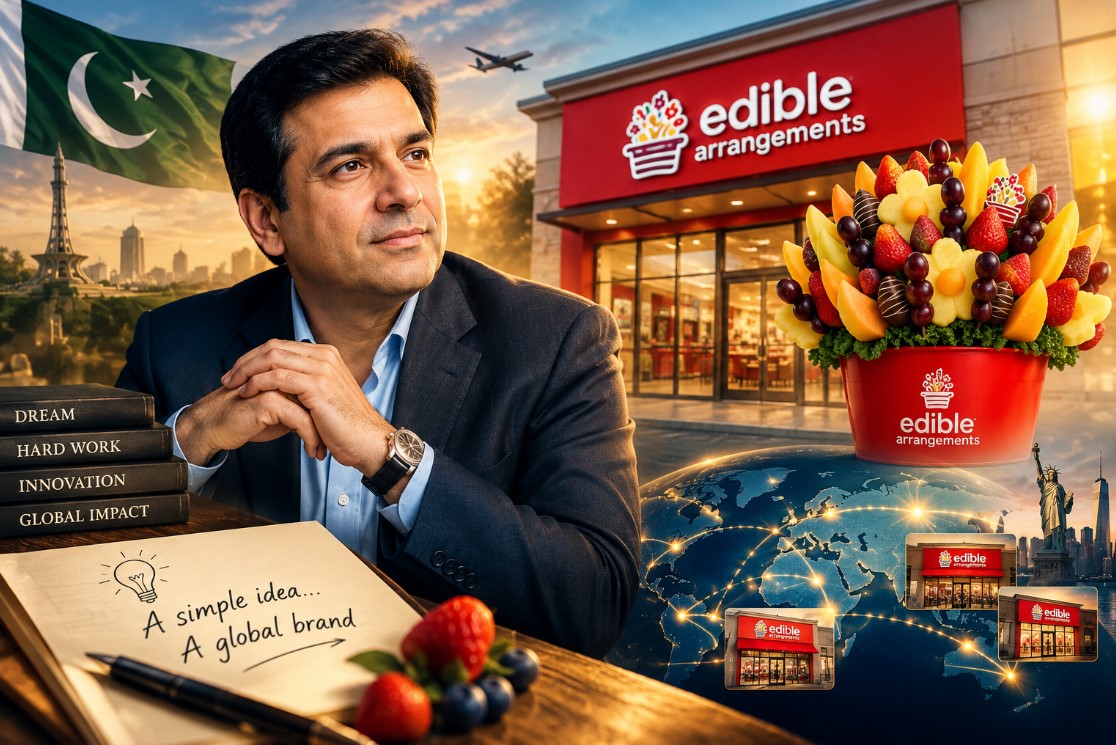

What if a business worth millions began with an ordinary flower shop, a young immigrant’s determination, and an idea that many people might have dismissed?
That is the remarkable story of Tariq Farid, the Pakistani-born entrepreneur behind Edible Arrangements, the company that transformed fresh fruit into beautifully designed bouquets and created a new way for people to celebrate birthdays, anniversaries, holidays, and special occasions.

His journey offers an important lesson for aspiring entrepreneurs in Pakistan and around the world. You do not always need to invent something completely new. Sometimes, the biggest opportunity lies in taking an ordinary product, presenting it differently, and building a business around the experience it creates.
From Pakistan to America: The Beginning of an Entrepreneurial Journey
Tariq Farid was born in Pakistan in 1969. His family moved to the United States in 1981, when he was around 11 years old. Growing up in Connecticut, he experienced the challenges of an immigrant family working hard to establish itself in a new country.
His father worked to support the family, and Tariq learned the value of hard work at a young age. He took on small jobs before finding an opportunity at a local flower shop.

That experience would eventually change the direction of his life.
Working with flowers taught him more than how to arrange bouquets. He learned about customer service, presentation, seasonal demand, gift-giving, and the importance of making a product memorable.
These practical lessons became the foundation for his future businesses.
According to a profile published by Fortune, Farid purchased a flower shop as a teenager with a loan of approximately $6,000. Rather than waiting for the perfect opportunity, he began learning how to run a business through direct experience.
The Flower Shop That Sparked a Bigger Vision: Edible Arrangements
A flower shop might seem like an ordinary small business. But Farid saw opportunities that extended beyond selling flowers.
Customers were not simply buying roses or bouquets. They were purchasing gifts to express love, appreciation, sympathy, congratulations, and celebration.
That distinction matters.
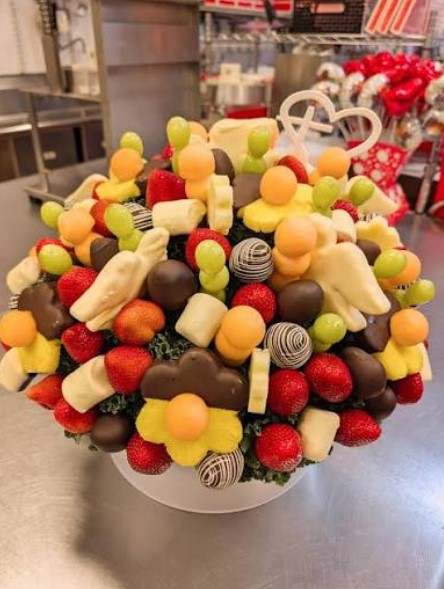
Successful businesses often understand the emotion behind a purchase. A customer buying an anniversary bouquet is not merely buying flowers. The customer wants to make another person feel special, and it appeals as well.
Farid learned how presentation and service could turn an ordinary purchase into a meaningful experience.
He also developed an interest in computers and technology, eventually building expertise that helped him manage and expand his business operations.
This combination of creativity, customer understanding, and technology would later become an important part of his entrepreneurial approach.
The Big Idea: What If Fruit Could Look Like Flowers?
In 1999, Tariq Farid and his brother Kamran, with help from other family members, opened the first Edible Arrangements store in Connecticut.
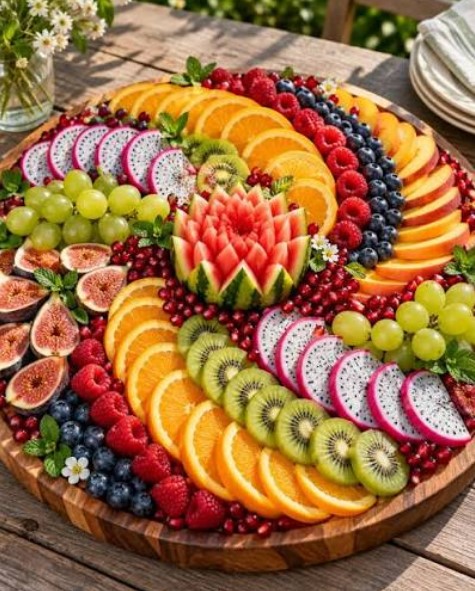
The concept was simple but distinctive.
Instead of arranging flowers in a bouquet, they arranged fresh fruit into beautiful displays that resembled floral arrangements. Customers could give these edible creations as gifts, combining visual appeal with something delicious to eat.
The idea connected several customer needs in one product.
It offered the beauty of a traditional bouquet, the freshness of fruit, and the convenience of a ready-made gift.
The result was a product that people could recognize immediately but had rarely seen presented in quite that way.
According to Farid’s account in Fortune, the team made just 28 arrangements during its first Easter season. Preparing them was slow and labor-intensive, but the positive response from customers convinced them that the concept had potential.
That small beginning became the foundation of a much larger business.
From One Store to an International Brand: Edible Arrangements
The real achievement was not simply creating an attractive fruit bouquet. It was building a business that could reproduce the experience consistently.
Edible Arrangements began franchising in 2001, allowing other entrepreneurs to operate stores using the brand’s concept and business model.
Franchising gave the company a path to expansion beyond locations its founders could personally manage.
Instead of relying exclusively on one shop, the business could grow through a network of operators following shared standards for products, presentation, and customer service.
The official company history describes the growth from its first Connecticut store to hundreds of locations worldwide. Over time, the business also expanded its products beyond fruit arrangements into other gifts and treats.
Read the official Edible franchise story to explore the company’s milestones.
This is where the story becomes especially valuable for entrepreneurs. Creating a successful product is one challenge. Creating a repeatable system that other people can operate is an entirely different achievement.
The Business Lesson: Sell an Experience, Not Just a Product
One of the strongest lessons from Farid’s journey is the power of differentiation.
Consider the difference between selling fruit in a conventional basket and selling fruit arranged as an artistic bouquet.
The underlying ingredients may be similar, but the presentation changes how customers perceive the product.
That difference can influence the gift’s perceived value, the occasion for which it is purchased, and the price customers are willing to consider.
Entrepreneurs can apply the same principle to many industries.
A bakery can sell customized celebration boxes instead of only individual cakes. A clothing business can offer curated gift collections rather than simply displaying garments. A digital agency can package several technical services into a clear solution for a specific business problem.
The principle is consistent: understand what customers want to achieve, then design the offer around that outcome.
The Power of Systems, Franchising, and Technology For Edible Arrangements
A business cannot expand indefinitely if every decision depends on its founder.
Farid’s broader entrepreneurial journey included developing technology and operational systems to support business growth. His ventures included Netsolace, which provided technology solutions for franchise operations, and BerryDirect, which supported sourcing and supply chain activities.
These activities illustrate an important strategic advantage: a company can become more scalable when the systems supporting its core product are designed deliberately.
For entrepreneurs, this means documenting processes, standardizing quality, training staff, tracking customer orders, and using technology to reduce repetitive work.
Franchising is one way to scale a proven physical business. Digital products, software subscriptions, licensing, and standardized service packages can provide other routes to growth.
The right model depends on the product, the market, and the resources available.
Why This Story Matters for Pakistani Entrepreneurs
Pakistan has entrepreneurs working in retail, food, textiles, handicrafts, healthcare, education, technology, and countless other industries.
Many businesses compete by offering similar products at lower prices. That can create pressure on profit margins and make it difficult to build a recognizable brand.
Farid’s journey encourages a different question.
Instead of asking only how to sell an existing product more cheaply, ask how to make it more distinctive, convenient, memorable, or valuable to a particular customer.
For example, a Pakistani entrepreneur could explore premium gift boxes featuring locally made crafts, customized corporate gifts, curated regional food products, or subscription services built around a specific audience.
These are possible business directions, not guaranteed success stories. Each would require customer research, reliable suppliers, careful costing, and testing before significant investment.
The opportunity lies in combining local strengths with thoughtful branding, modern distribution, and a clear customer promise.
Five Lessons Entrepreneurs Can Learn From Tariq Farid’s Edible Arrangements
1. Start with what you know.
Farid used the experience he gained in the flower business to recognize an opportunity in fruit arrangements. Existing knowledge can provide a practical starting point for a new venture.
2. Look for overlooked opportunities.
A familiar product can become more attractive when its design, packaging, delivery, or purpose changes.
3. Listen to customer reactions.
Early feedback helped Farid recognize the potential of his fruit arrangements. Entrepreneurs should test ideas with real customers rather than relying entirely on personal assumptions.
4. Build systems before expanding too far.
A product that sells well in one location still needs consistent quality, reliable operations, and workable economics before it can be replicated.
5. Think beyond the first sale.
A recognizable brand, excellent service, repeat purchases, referrals, and a scalable distribution model can create more durable value than a one-time sales opportunity.
The Bigger Lesson: Build Something That Can Grow Beyond You
Tariq Farid’s story is not simply about a Pakistani immigrant who became a successful entrepreneur in America. It is about recognizing an opportunity, learning through experience, responding to customers, and gradually developing a business capable of reaching a much larger market.
The original idea did not require an entirely new ingredient. Its strength came from the way existing elements were combined and presented.
That is an important reminder for anyone thinking about starting a business today.
You do not necessarily need a revolutionary invention. You need a genuine customer problem or desire, a distinctive offer, a way to deliver it consistently, and a business model that can grow without sacrificing quality.
For Pakistani entrepreneurs, the next major opportunity could emerge from food, fashion, healthcare, education, technology, or an entirely unexpected industry.
The question is not simply what product you can sell.
It is what experience, solution, or value you can build into a business that people will want to buy again.
Sometimes, a global brand begins with a small shop and one idea that someone decides is worth pursuing.
🔗 Further Reading and Sources
- Edible’s Official Company History
- Fortune: How Tariq Farid Built Edible Arrangements
- International Franchise Association
- Tariq Farid’s Entrepreneurial Story in Inc.
This article is based on publicly available company histories and published reporting. It is intended to share entrepreneurship lessons rather than promise any particular financial outcome.
For further insights, keep visiting blogy365.com



Leave a Comment