


The celebration of Mawlid-un-Nabi (the birth of Prophet Muhammad, peace be upon him) has long been a subject of discussion within the Islamic world. Drawing from the Quran, Hadith, and the consensus of Islamic scholars, this blog aims to provide a well-rounded understanding of the permissibility and significance of commemorating this special day.
1.0 Permissibility of Mawlid-un-Nabi Through the Quran
The Quran offers ample evidence for celebrating occasions of divine blessings, and the birth of Prophet Muhammad (peace be upon him) is undoubtedly one of the greatest blessings for humanity. Consider the following verses:
1.1 A Day of Celebration
Surah Al-Ma’idah (5:114) narrates Prophet Eisa’s (Jesus) plea to Allah for a table spread from heaven, marking the day as one of celebration:
“O Allah, O our Lord! Send down to us a table spread from heaven, so that it may become a day of celebration for us – for our former and latter people.”
If a table sent from the heavens is a cause for celebration, surely the birth of the Mercy to the Worlds (Prophet Muhammad) is worthy of even greater rejoicing.
1.2 Proclaiming Allah’s Favors
The Quran commands Muslims to publicly acknowledge and celebrate Allah’s blessings:
“And abundantly proclaim the favors of your Lord.” (Surah Duha 93:11)
Prophet Muhammad (peace be upon him) is referred to as a favor:
“Allah has indeed bestowed a great favor upon the Muslims, in that He sent to them a Noble Messenger from among them…” (Surah Aal-e-Imran 3:164).
Thus, celebrating the birth of the Prophet is consistent with acknowledging and proclaiming this divine favor.
1.3 A Day of Special Importance
Quranic verses also indicate the special importance of certain days associated with the Prophets:
“Peace be upon him the day he was born, the day that he dies and the day that he will be raised to life.” (Surah Maryam 19:15)
This verse, referring to Prophet Yahya (John), indicates the significance of commemorating a Prophet’s birth, which applies to the birth of Prophet Muhammad as well.
2.0 Evidence from Ahadith
The Hadith literature provides additional support for celebrating Mawlid, with numerous examples from the life of Prophet Muhammad (peace be upon him) and his companions.
2.1 Fasting on Mondays
One of the most well-known Ahadith supporting the celebration of the Prophet’s birth is found in Sahih Muslim:
Abu Qatada reported that the Prophet was asked about fasting on Mondays. He replied, “It is the day I was born and revelation was sent down to me.”
This Hadith shows that the Prophet himself marked the day of his birth by fasting, a form of worship, thus allowing for various forms of ibadah (worship) to commemorate this day, whether it be fasting, prayers, or gatherings.
2.2 Respect for Birthplaces of Prophets
There is also precedence for showing reverence to places where Prophets were born. In Sunan Nisai, it is mentioned that the Prophet (peace be upon him) was asked by Jibreel (Gabriel) to pray at Bethlehem, the birthplace of Prophet Eisa (Jesus).
3.0 Celebration of Mawlid in the Opinion of Ijma (Consensus) of Scholars
The Ijma (consensus) of Islamic scholars, including prominent names like Imam Suyuti, supports the celebration of Mawlid. According to classical scholars, gathering to celebrate and remember the birth of Prophet Muhammad (peace be upon him) is not only permissible but also meritorious.
One prominent scholar, Ibn Hajar al-Haytami, stated:
“The permissibility of celebrating Mawlid has been agreed upon by scholars, as it involves the expression of joy over the Prophet’s birth, which is among the greatest blessings of Allah.”
4.0 Imam Ahmed Raza Khan on Mawlid-un-Nabi
Imam Ahmed Raza Khan Barelvi, a renowned Islamic scholar and leader of the Ahl-e-Sunnat movement, was a strong advocate for celebrating Mawlid. He argued that celebrating the birth of the Prophet (peace and blessings be upon him) is not just permissible but a highly recommended act of worship. He composed numerous poems and works that emphasize the importance of Mawlid.
One of his most famous works on this subject is his book “Al-Dawlat al-Makkiyah”, where he elaborated on the legal basis for celebrating Mawlid using Quranic verses and Ahadith. He explained that rejoicing the birth of the Prophet (peace and blessings be upon him) is an act of gratitude to Allah for sending the final Messenger to guide humanity.
Aalahazrat beautifully expressed his love and reverence for the Prophet (peace be upon him) in his poetry:
- “Jashn-e-Aamad Rasool Hai Jalwa Gah-e-Burzul Hai Naqshe Paaye Rasool Se Musafir-e-Dil Ko Raah Hai”
This couplet from Aalahazrat’s poetry reflects the deep reverence for the Holy Prophet and the celebration of his arrival as a beacon of light for humanity.
5.0 Celebration of Mawlid-un-Nabi Around the World
5.1 In the Muslim World
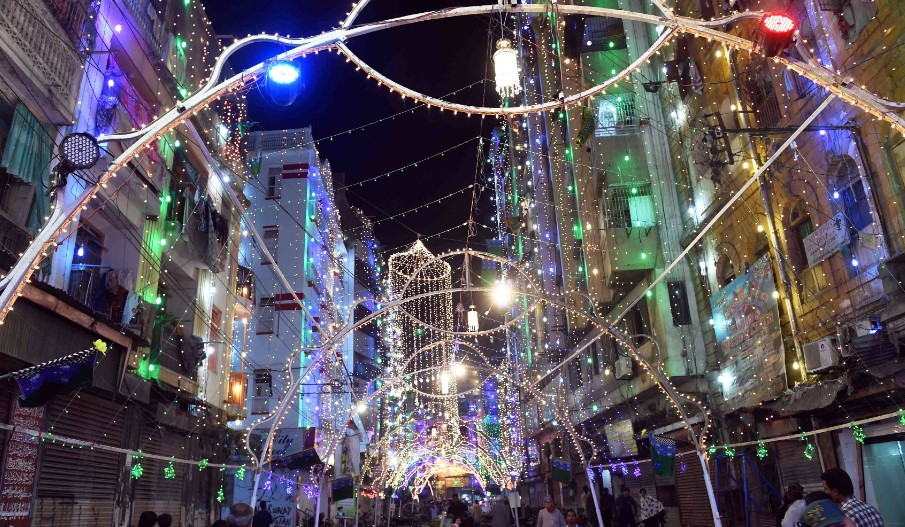
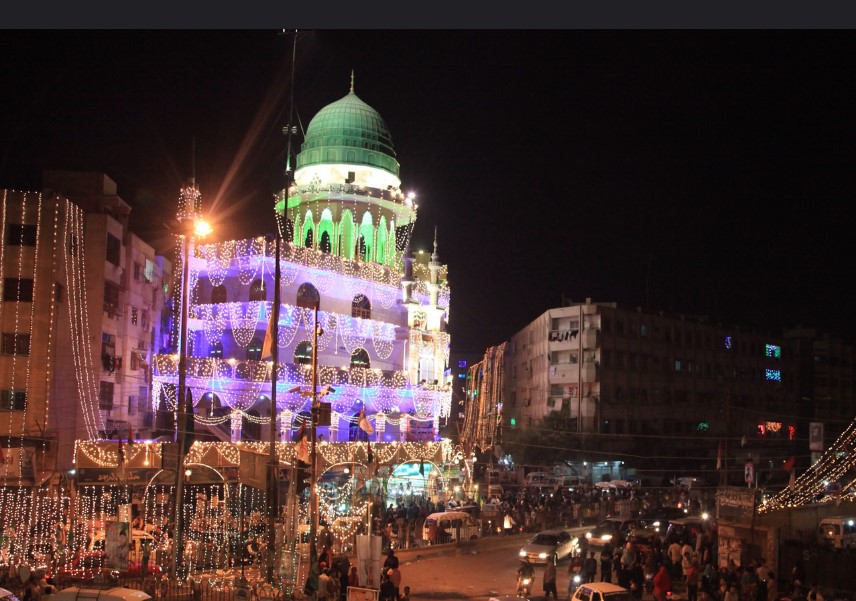
Mawlid is celebrated in many Muslim-majority countries, such as Pakistan, Morocco, and Egypt, with a variety of traditions including processions, religious gatherings, and the distribution of food to the poor. These celebrations aim to bring communities together to express their love for the Prophet (peace be upon him).
5.2 In Western Countries
In countries with growing Muslim populations, such as the United States, Canada, and the United Kingdom, Mawlid is observed through mosque gatherings and lectures focusing on the life and teachings of Prophet Muhammad (peace be upon him).
6.0 Reference Books & Articles
For those interested in further reading on the subject, several classical and contemporary works discuss the permissibility and significance of Mawlid:
- Al-Dawlat al-Makkiyah by Imam Ahmed Raza Khan
- Hassan al-Maqsad fi Amal al-Mawlid by Imam Jalaluddin Suyuti
- Al-Mawlid al-Nabawi by Ibn Kathir
- Dala’il al-Khayrat by Imam al-Jazuli
These works provide detailed insights into the historical, theological, and spiritual aspects of celebrating the Prophet’s birth.
Conclusion
Mawlid-un-Nabi is not just a celebration of the birth of Prophet Muhammad (peace be upon him), but an expression of love, gratitude, and joy for the greatest mercy bestowed upon mankind. The Quran, Hadith, and the consensus of scholars affirm the permissibility of rejoicing in this momentous occasion. Whether through fasting, gatherings, or charitable acts, celebrating Mawlid is a way of showing our deep love for the Prophet and gratitude to Allah.
More Related
- Learn more about the significance of fasting on Mondays here.
- Explore the detailed commentary on Surah Duha here.
This well-rounded approach demonstrates that the celebration of Mawlid is not only rooted in Islamic tradition but also a global practice that unites Muslims in reverence for their beloved Prophet.
Leave a Comment