



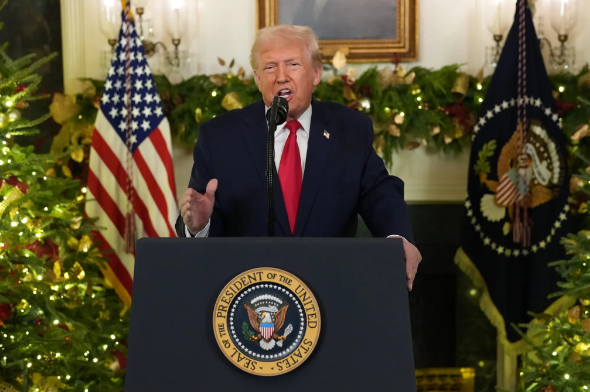
President Donald Trump stepped before the nation with confidence, laying out what he called clear proof of economic progress under his administration. The message was simple. Prices are easing, America is regaining strength, and tough policies are finally paying off.
Yet for many households still watching bills climb, especially on essentials like energy and healthcare, the picture remains complicated.
This gap between official optimism and everyday reality now defines the economic conversation.
💼 A Victory Speech by Trump Framed Around Policy Strength
Trump opened his address with familiar criticism of Biden-era economic decisions, arguing they weakened the US position globally and fueled inflation at home. He contrasted that record with his own approach, highlighting tariffs, immigration enforcement, and energy expansion as tools restoring balance.
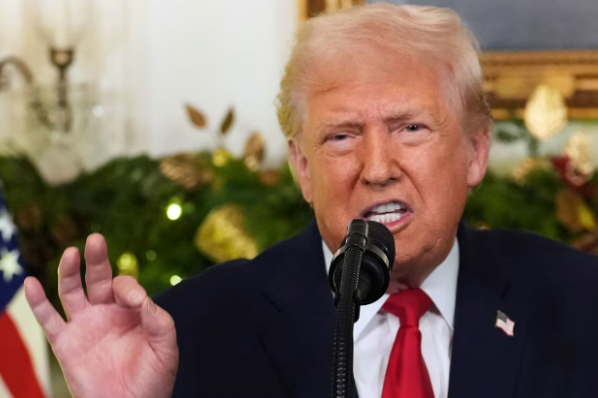
He praised tariffs as leverage, not punishment. In his view, they forced foreign governments and corporations to share the cost burden rather than passing it on to American consumers.
The speech also introduced a surprise announcement. A one-time warrior dividend of $1,776 for military service members, positioned as both recognition and economic relief.
Read This: Trump’s Terrifs
🔥 Home Heating Relief for Some, Higher Bills for Most, Says Trump
The White House pointed to projected winter savings for households using propane or heating oil, citing lower expected costs compared to last year.
What went unsaid matters more.
According to the US Energy Information Administration, Americans who rely on electricity or natural gas will likely see increases of around 3 percent and 5 percent this winter. These households make up the vast majority of the country.
Trump did not directly address heating costs, but referenced his declaration of a national energy emergency and promised that new power generation plants opening over the next year would bring electricity prices down.
For now, those reductions remain future tense.
You can review the full energy outlook directly from the US Energy Information Administration
https://www.eia.gov
Trump on US Economy
💊 Drug Pricing Deals and the Launch of TrumpRx
Healthcare took center stage as Trump highlighted new agreements with major pharmaceutical companies aimed at reducing prescription drug prices.
At the core of this effort is the Most Favored Nation pricing model. Under these voluntary deals, participating companies commit to selling certain drugs in the US at prices comparable to the lowest levels offered in similar countries.
Key highlights include
Lower pricing commitments for Medicaid
New drug launches tied to international benchmarks
Weight loss medications are priced as low as $149 per month in some cases
Trump also announced TrumpRx, a new online platform launching in January. The site will guide consumers to direct-to-consumer drugmaker channels offering discounted cash prices for those who choose to bypass insurance.
More details on the initiative are available via White House briefings and reporting from CNN
https://www.whitehouse.gov
https://www.cnn.com
⚖️ Experts Question the Real World Impact
While the announcements sound bold, health policy experts urge caution.
Medicaid already negotiates substantial discounts, which limits how much additional savings these deals can generate. Many new drugs debut first in the US, making international price comparisons less relevant. And for most patients, paying cash upfront is simply not an option.
Weight loss medications may be the exception, where demand and consumer willingness to pay intersect.
The concern is not intent. It is a scale.
📊 Bottom Line: What This Means for Americans
Trump’s economic message is internally consistent. Strong borders, tough trade policy, energy expansion, and aggressive negotiation. The administration argues these levers are already bending prices downward.
But lived experience tells a mixed story.
Some costs may fall. Others continue to rise. And many benefits remain tied to future promises rather than current relief.
The economy, once again, sits at the intersection of perception and pocketbook.
Leave a Comment