


There was a time when drinking water did not say anything about your wealth.
You simply turned on the tap, filled a glass, and drank.
Water was water.
Then something changed.
A product that had once been associated with necessity slowly became associated with luxury, health, lifestyle and social status.
Today, people can spend hundreds of times more on bottled water than they would on ordinary tap water. Some bottles are placed on restaurant tables, in luxury hotels, inside gyms and beside celebrities.
The fascinating question is not just how bottled water became popular.
It is how marketers convinced millions of people that something they could already get for free was worth paying for.
The Real Product Was Never Just Water
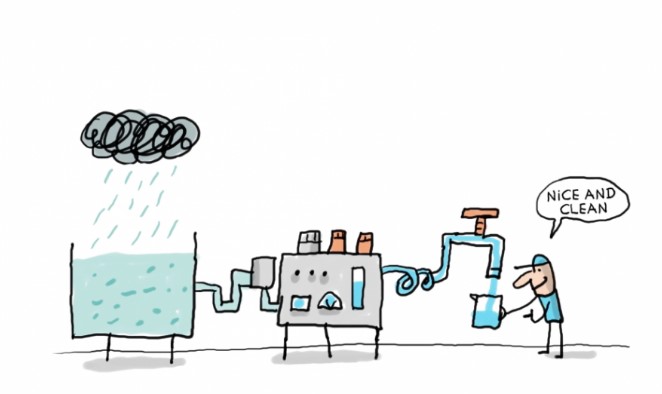
The bottled water industry did not simply sell water.
It sold a story.
The story was about purity.
Then health.
Then sophistication.
And eventually, status.
This is one of the most powerful lessons in modern marketing because it demonstrates something every entrepreneur should understand:
People do not always buy the product. They buy what the product represents.
A bottle of water can contain water.
But the brand on that bottle can communicate an entirely different message.
When Tap Water Was Simply Water
For generations, tap water was an ordinary part of daily life in the United States and other developed countries.
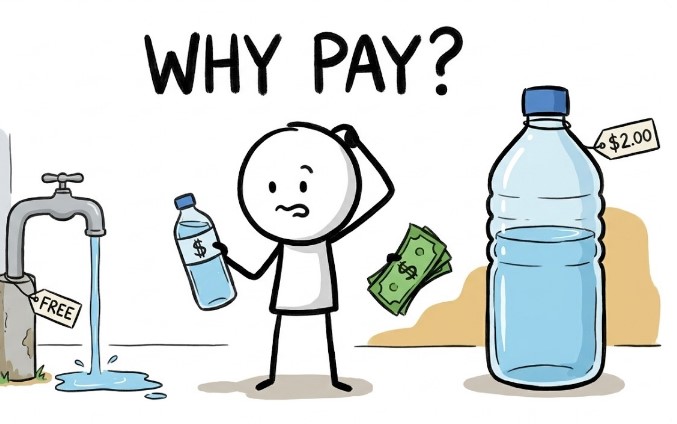
People drank it at home, filled glasses in restaurants and carried water in reusable containers.
There was no need to convince consumers that they needed to purchase a branded bottle every time they felt thirsty.
Bottled water existed, of course, but its transformation into a mass market lifestyle product came through decades of changing consumer habits, packaging, distribution and marketing.
The industry eventually discovered an extraordinary opportunity.
Instead of selling water as a basic necessity, companies could position bottled water as a premium choice.
And that changed everything.
The French Connection and the Rise of Premium Water
France became strongly associated with premium mineral water brands, including internationally recognized names such as Perrier and Évian.
Brands such as these helped establish the idea that bottled water could have a distinctive identity.
The bottle itself became part of the experience.
The source mattered.
The minerals mattered.
The packaging mattered.
The brand mattered.
Suddenly, consumers were not simply buying something to drink.
They were buying a particular kind of water.
That distinction became enormously valuable.
Then Marketing Changed the Meaning of Water
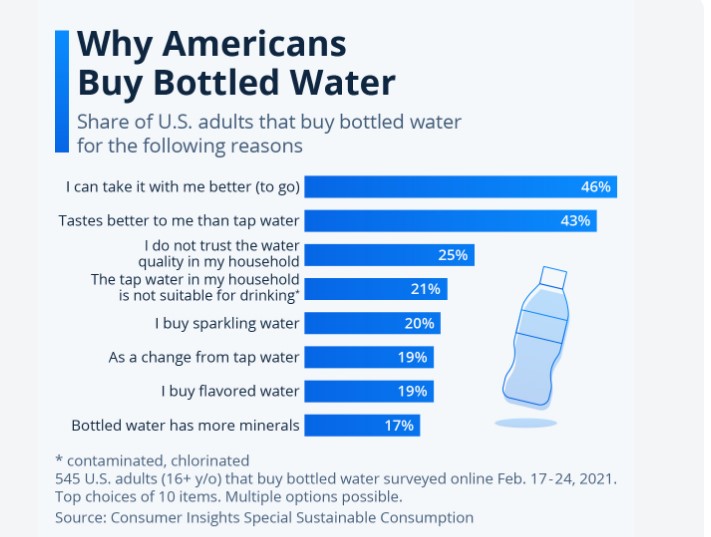
One of the most interesting parts of the bottled water story is the role of advertising and celebrity culture.
When a famous person holds a particular product, consumers do not necessarily see only the product.
They see the lifestyle surrounding it.
A celebrity drinking bottled water can make the bottle appear connected with fitness, beauty, success, travel or luxury.
This is a broader principle of consumer psychology.
Association creates perceived value.
Luxury watches understood it.
Fashion understood it.
Cars understood it.
Bottled water eventually understood it too.
From Necessity to Lifestyle
Think about the transformation.
At the beginning:
Water was something people needed.
Then:
Bottled water became something people purchased for convenience.
Then:
Certain bottled waters became associated with health and purity.
Eventually:
Premium bottled water could become a lifestyle statement.
That is a remarkable marketing transformation.
The physical difference between two bottles might be relatively small, but the psychological difference can be enormous.
One says:
I need water.
The other can say:
This is the kind of water I choose.
The Psychology Behind Premium Pricing
Why does someone pay more for something that appears to be fundamentally similar?
Because price is not always determined by production cost.
Perceived value plays a major role.
Consider coffee.
Coffee can be made at home for a small amount of money.
Yet millions of people willingly purchase branded coffee from cafés.
The same principle appears across fashion, automobiles, watches, restaurants and bottled water.
The product becomes a vehicle for identity.
Marketing turns a commodity into a category.
Branding turns the category into a preference.
And social influence can turn that preference into a status signal.
The Bottle Became Part of the Image
Packaging is one of the most underestimated elements of marketing.
Put ordinary water into an anonymous container and it looks ordinary.
Put it into an elegant bottle, give it a memorable name, position it in luxury environments and surround it with aspirational imagery, and consumers can perceive it very differently.
This is why packaging is not simply decoration.
Packaging communicates positioning.
A premium bottle can visually tell customers:
This is different.
This is refined.
This is worth paying for.
The water has not necessarily changed dramatically.
The perception has.
But There Is an Important Correction
There is a popular version of this story claiming that a French company deliberately entered America, persuaded authorities to shut down free tap water and then used celebrities to convince Americans to buy bottled water.
That version is too simplistic.
The history of bottled water in the United States is much more complicated.
Public water systems, sanitation standards, consumer preferences, advertising, convenience, environmental concerns and bottled water companies all played roles in the industry’s development.
So the deeper lesson is not that one company simply turned off America’s taps.
The more interesting lesson is how marketing can change the perceived value of an everyday commodity.
That lesson is well documented across the history of consumer branding.
The Billion Dollar Marketing Lesson
Here is where the story becomes much bigger than water.
Imagine you sell something ordinary.
Something people can already obtain cheaply.
Your biggest opportunity may not be to make the product radically different.
It may be to change how people understand it.
That is what powerful branding does.
A commodity says:
Here is what I am.
A brand says:
Here is what choosing me says about you.
That distinction can create enormous commercial value.
What Entrepreneurs Can Learn From Bottled Water
If you are building a business, remember these five lessons.
1. Never Assume Your Product Is Too Ordinary
Some of the world’s biggest businesses were built around ordinary products.
The question is not always what you sell.
The question is how you position it.
2. Sell the Outcome, Not Just the Product
Customers rarely care only about specifications.
They care about what the product helps them feel, achieve or communicate.
Sell convenience.
Sell confidence.
Sell belonging.
Sell transformation.
3. Perception Can Create Value
Two products can serve almost the same basic purpose while commanding very different prices.
Branding helps explain why.
4. Social Proof Matters
When trusted people use a product, other consumers may perceive that product differently.
Celebrities are one form of social proof.
Customer reviews, experts, communities and respected creators can play similar roles.
5. Status Is a Powerful Economic Force
People buy products for practical reasons.
But they also buy products because those products help express identity.
Luxury marketing has understood this for generations.
The bottled water industry provides a fascinating everyday example.
The Water We Drink Is Only Half the Story
The real story is not about water.
It is about human perception.
A resource that once seemed too ordinary to market became a global consumer category.
A bottle became packaging.
Packaging became branding.
Branding became lifestyle.
And lifestyle became identity.
That is why bottled water is such an interesting case study for anyone studying business, advertising or consumer psychology.
The next time you see someone paying a premium for a bottle of water, do not just look at the water.
Look at the brand, the packaging, the environment and the story.
Because those four things may be where the real product begins.
Useful Sources and Further Reading
For historical and industry context, readers can explore the International Bottled Water Association and the U.S. Food and Drug Administration bottled water resources.
For broader information about drinking water and public water systems, the U.S. Environmental Protection Agency provides regulatory and educational resources.
For further insights, keep visiting blogy365.com


Leave a Comment