

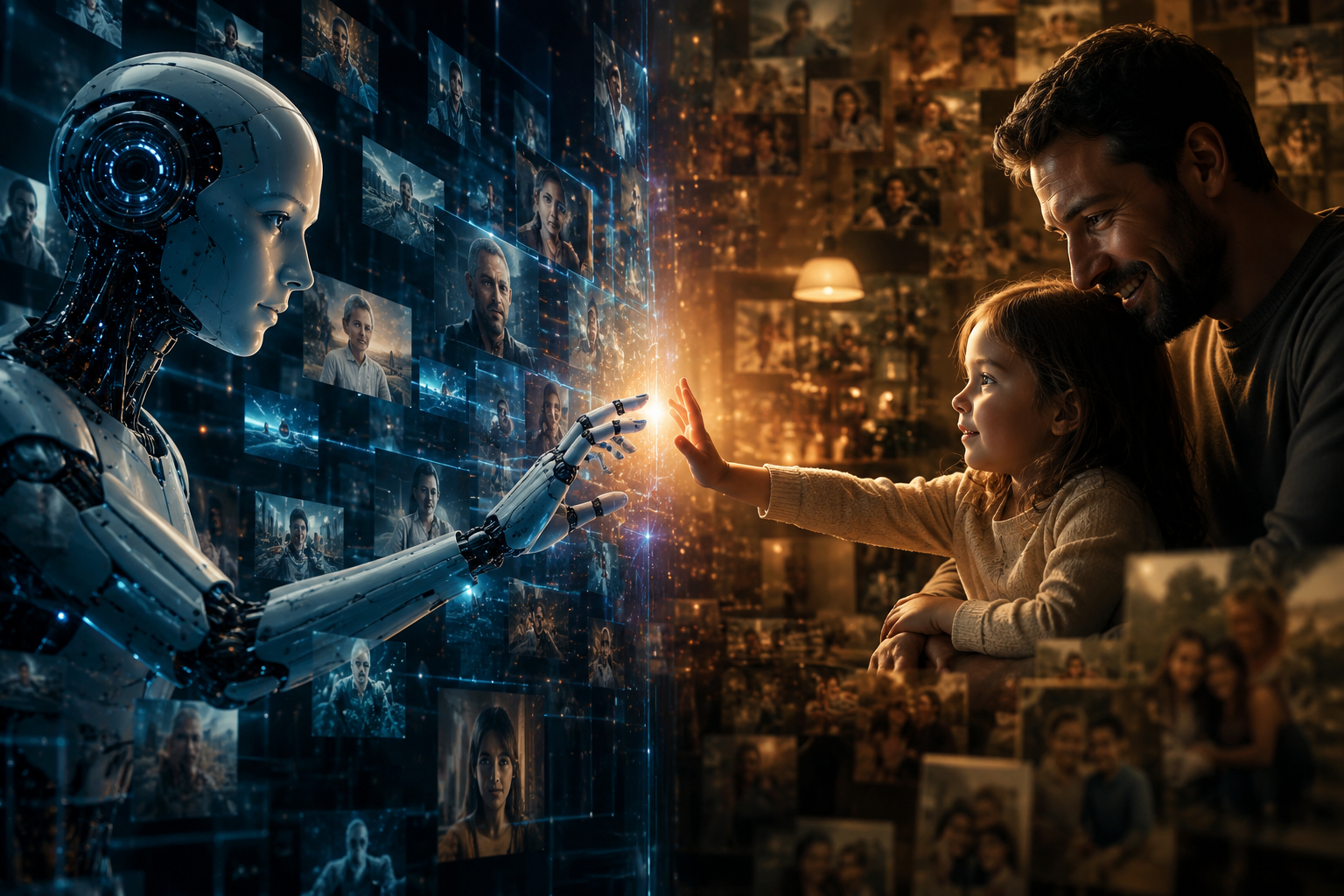

Artificial intelligence can now create images, generate videos, write stories, produce music, design presentations and even imitate the way humans communicate.
The technology is extraordinary.
But there is a question we rarely stop to ask:
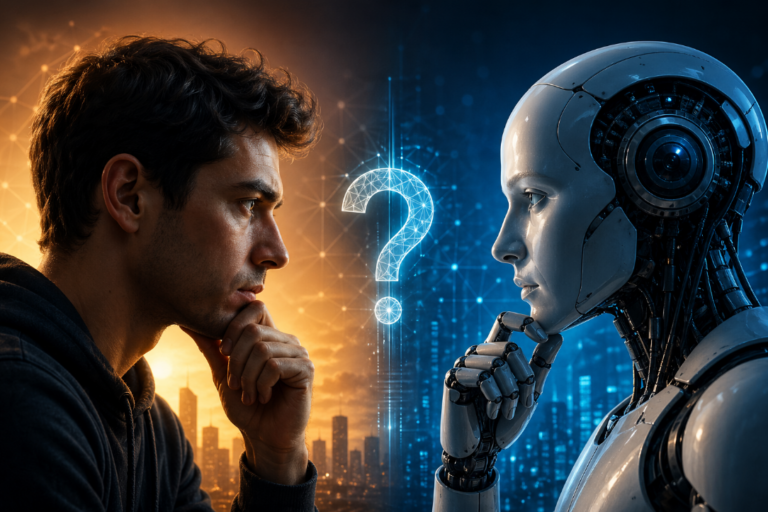
As AI becomes better at creating everything around us, are we becoming worse at protecting what makes us human?
That question matters more than the next AI feature.
Because a beautiful image can be generated in seconds. A video can be created from a simple sentence. A message can be written perfectly.
But can technology create a genuine feeling?
Can it create the warmth of a mother’s voice, the comfort of a friend’s presence, the trust between two people, or the memories created by years of sharing life together?
Probably not.
And perhaps that is the conversation we need to have.
We Are Living in a More Colorful Digital World As AI
AI is making the digital world more powerful and visually beautiful than ever.
According to Stanford’s 2026 AI Index, AI capabilities continue to advance rapidly across areas including image, video, language, reasoning and other forms of multi modal technology.
We can ask a machine to create a photograph of a place that does not exist.
We can turn an idea into a video.
We can recreate voices, faces, environments and entire stories.
The possibilities are astonishing.
But there is a strange paradox hiding underneath all this progress.
The more artificial experiences we create, the more important authentic human experiences become.
AI Can Imitate Emotion, But Can It Feel?
AI can understand patterns in language.
It can recognize emotional words.
It can produce a comforting response.
It can even create an image that looks deeply emotional.
But there is a difference between expressing emotion and experiencing emotion.
A machine can generate a picture of a father holding his child.
But it has never waited for that child to come home.
It can write a beautiful message about friendship.
But it has never sat beside a friend during the hardest night of their life.
It can generate the words I miss you.
But it does not actually miss anyone.
That distinction may become one of the most important conversations of the AI era.
Technology Is Connecting Us While We Risk Becoming Disconnected
Here is where the story becomes uncomfortable.
We have more ways to communicate than any generation before us.
Messages travel instantly.
Video calls connect people across continents.
Social platforms allow us to maintain hundreds or even thousands of connections.
Yet many people still feel lonely.
The World Health Organization reports that approximately one in six people worldwide experience loneliness, with young people among the groups reporting particularly high levels. WHO also warns that excessive or harmful digital media use can contribute to social disconnection.
So perhaps the real question is not whether technology is connecting us.
The question is:
What kind of connection are we building?
Are We Losing Relationships While Chasing Progress?
Progress is necessary.
We should not fear technology simply because it is powerful.
AI can improve education.
It can help businesses.
It can support healthcare.
It can give creators tools that were previously available only to large organizations.
It can help people learn skills and open doors that once seemed impossible.
But progress should never require us to abandon the people who made our journey meaningful.
There is a danger in becoming so focused on productivity that we forget presence.
We reply to a message while sitting with family.
We scroll through someone’s life instead of asking how they are actually doing.
We send an emoji instead of making a phone call.
We create the perfect digital memory while missing the imperfect moment happening in front of us.
And slowly, without realizing it, we can become surrounded by technology while feeling emotionally alone.
The Human Things AI Should Never Replace
There are things worth protecting.
A long conversation with someone you love.
A parent’s advice.
A friend’s unexpected phone call.
Sitting together without needing a screen.
Laughing at something that makes absolutely no sense to anyone else.
Visiting someone when they are going through a difficult time.
Forgiving someone.
Remembering an old story.
Holding someone’s hand when words are not enough.
These moments may not be technologically impressive.
But they are priceless.
The WHO Commission on Social Connection has emphasized that strong social connections matter for health, well being, communities and even longer lives.
That should make us pause.
Progress Is Good, But Humanity Must Come With It
We should absolutely move forward.
We should learn AI.
We should teach our children technology.
We should use artificial intelligence to solve real problems.
We should create businesses, careers and opportunities with it.
But while we teach machines how to become more human, we must make sure humans do not become less human.
That is the balance we need.
Use AI to create.
Use technology to communicate.
Use digital tools to grow.
But never allow them to replace love, friendship, family, compassion and genuine human presence.
Because one day, we may look back at this extraordinary technological revolution and realize something painful.
We created a more colorful world…
but forgot to hold on to the people who gave that world its meaning.
The Future Should Be More Human, Not Less Due AI
Maybe the real success of AI will not be measured only by how intelligent machines become.
Maybe it will also be measured by what humans choose to protect.
If technology gives us more time, let us spend some of that time with our families.
If AI makes our work easier, let us use the extra time to live.
If technology helps us communicate faster, let us also remember to communicate deeper.
And if the world becomes increasingly artificial, let us become even more intentional about being real.
Because at the end of life, we probably will not remember the most impressive technology we used.
We will remember the people we loved, the people who loved us, and the moments we shared with them.
Suggested Discover Excerpt
AI can now create stunning images, videos and stories in seconds. But as artificial intelligence becomes more powerful, one question deserves our attention: are we gaining a more colorful digital world while quietly losing genuine human relationships?
Recommended External Resources
For readers who want to explore the subject further, Stanford’s 2026 AI Index Report provides a detailed look at how rapidly AI is advancing across technology and society. Stanford AI Index 2026
The World Health Organization’s Commission on Social Connection examines loneliness, social isolation and why genuine human connection matters for health and well being. WHO Commission on Social Connection
Progress is important.
But humanity is priceless.
For further insights, keep visiting blogy365.com



Leave a Comment