

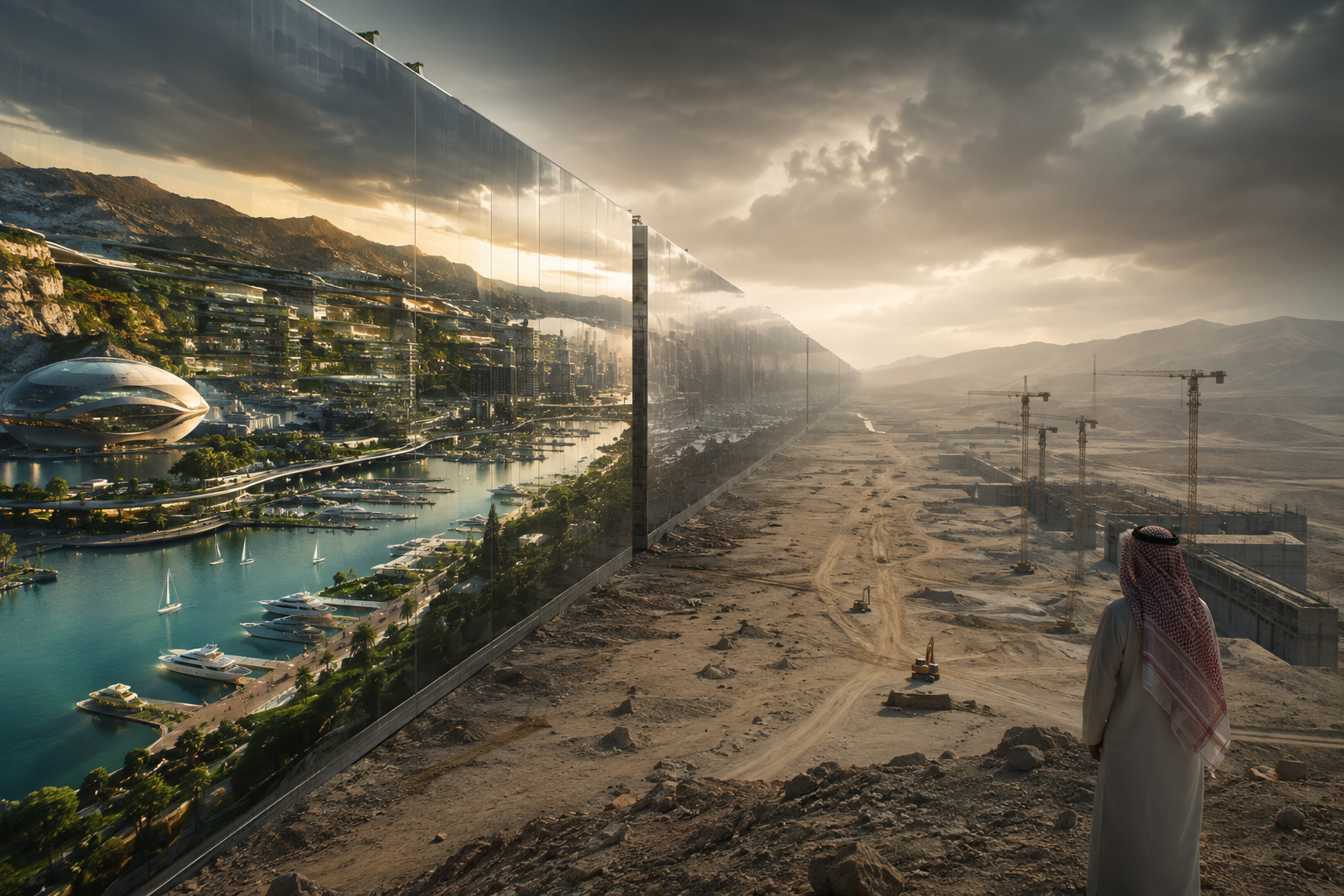

Saudi Arabia once promised the world something that sounded less like a city and more like science fiction.
A 170-kilometer mirrored metropolis stretching across the desert.
Nine million residents.
Artificial intelligence everywhere.
Clean energy.
Robot workers.
A city where cars would supposedly become unnecessary and the traditional idea of urban life would be rewritten from scratch.
That vision was called The Line, the centerpiece of Saudi Arabia’s enormous NEOM development.
Now the dream looks dramatically different.
Billions of dollars have already been spent. Construction has been suspended on The Line. Major contracts connected to NEOM have been canceled or reconsidered. Some workers have been relocated. And Saudi Arabia appears to be redirecting attention toward projects with clearer economic returns, including artificial intelligence infrastructure, data centers, tourism, logistics, and more practical development.
The question is no longer whether NEOM will look exactly like the futuristic vision presented to the world.
The question is much bigger.
What happens when one of the most ambitious mega projects in modern history collides with engineering reality, financial pressure, and the economics of building an entirely new city in the desert?
The Dream That Was Supposed to Change Cities Forever
When Saudi Arabia announced NEOM, the ambition was extraordinary.
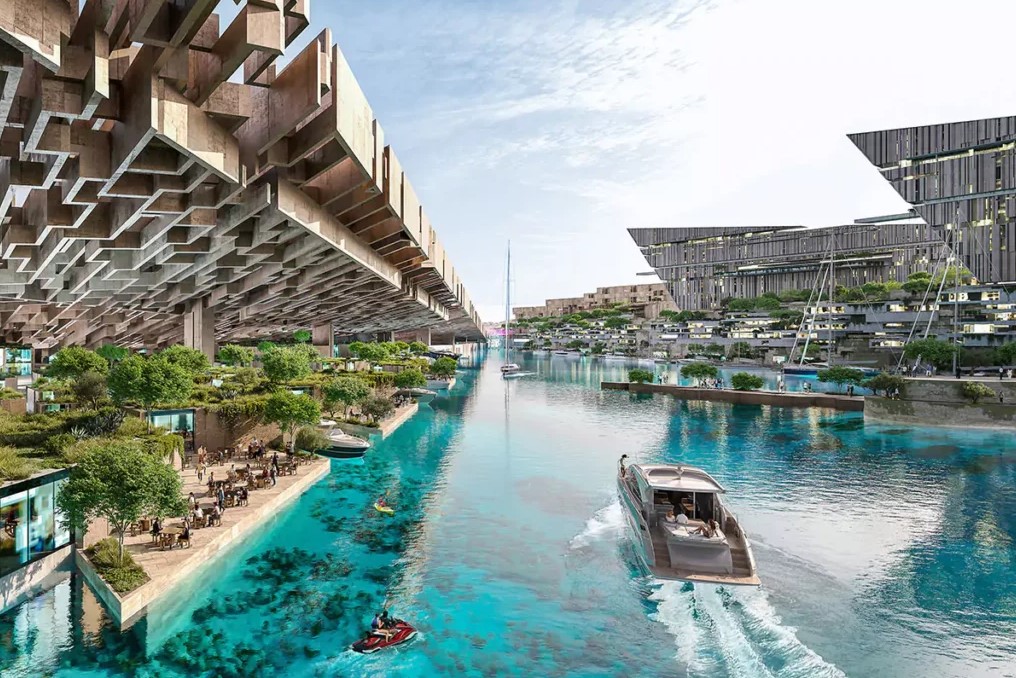
The Line was presented as a radically different model of urban development. Instead of a sprawling traditional city, Saudi Arabia envisioned a narrow linear structure stretching for 170 kilometers.
The original vision promised a city powered by clean energy and designed around advanced technology.
There would be no traditional urban sprawl.
No conventional roads filled with traffic.
No dependence on fossil fuels for everyday life.
The concept was visually spectacular, and it quickly became one of the most discussed construction projects on Earth.
NEOM described itself as a new region in northwest Saudi Arabia designed to support economic diversification and create new models of sustainable development.
But turning an extraordinary architectural concept into a functioning city is a completely different challenge.
That difference is now becoming impossible to ignore.
More Than $50 Billion Has Already Gone Into the Vision
The scale of the spending is difficult to comprehend.
Reporting and project analysis have placed expenditure on NEOM at roughly $50 billion or more, although precise figures vary depending on what is counted as spending, commitments, and broader development costs.
The Line itself was supposed to become the symbol of Saudi Arabia’s transformation.
Instead, only a small portion of its enormous planned footprint has progressed to physical construction.
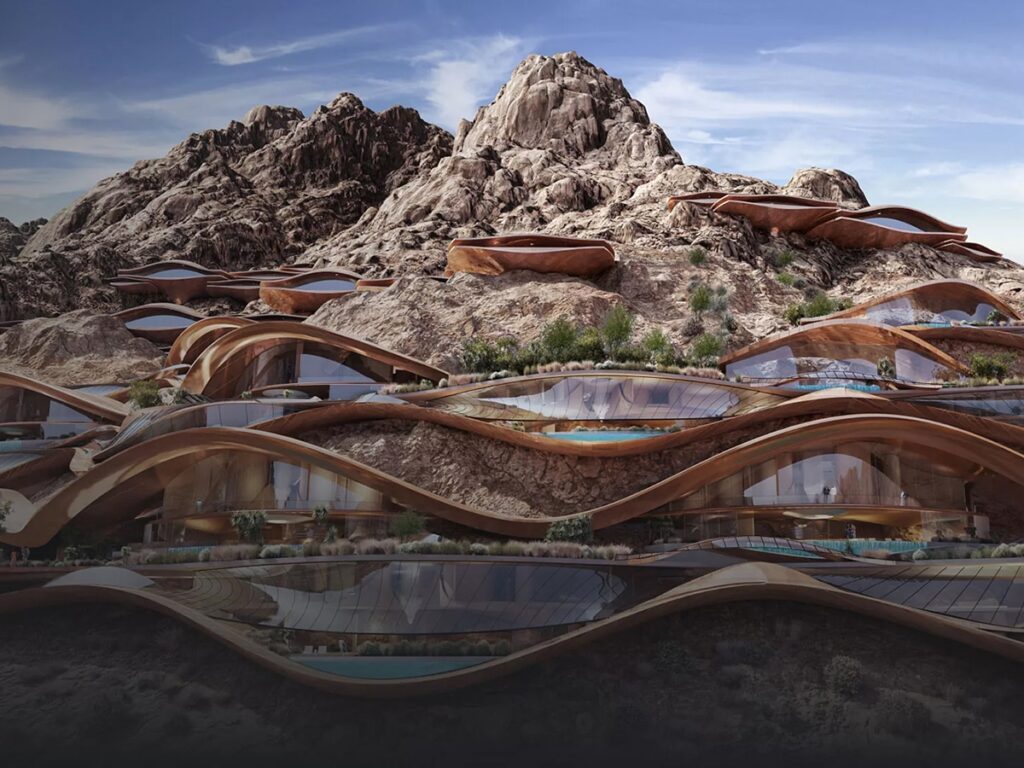
Architectural ambitions that once stretched across the desert have collided with the simple economics of concrete, steel, transportation, utilities, labor, water, and long-term maintenance.
That is the uncomfortable reality of mega projects.
A spectacular rendering costs almost nothing compared with the infrastructure required to make that rendering real.
The Line Has Not Simply Disappeared
This is where the story needs nuance.
Saudi Arabia has not publicly declared that every part of NEOM has been canceled.
Instead, The Line has faced suspension, redesign, and major scaling back.
Architectural reporting has described the project as being at a crossroads, with construction suspended and the original ambitions significantly reduced.
Meanwhile, other parts of NEOM continue to exist.
That distinction matters.
NEOM is not one building.
It is an enormous collection of projects covering tourism, industry, energy, technology, logistics and urban development.
Some components can survive even if the original dream of The Line changes beyond recognition.
The Desert Has Become the Most Powerful Symbol of the Problem
The most striking image emerging from the NEOM story is not a futuristic skyscraper.
It is construction infrastructure sitting in the desert.
Foundations.
Excavation.
Steel.
Concrete.
Massive engineering works designed for a future city that has not arrived.
The Line was supposed to demonstrate what the city of tomorrow could become.
Instead, its construction slowdown has taught a different lesson.
Vision is not the same thing as feasibility.
A government can announce a breathtaking project.
It can hire the best architects.
It can attract international engineering companies.
It can spend billions.
But eventually physics, finance, logistics and demand all get a vote.
Why Saudi Arabia Started Rethinking NEOM
The problems did not appear overnight.
Reports over several years raised questions about the project’s enormous cost, construction timeline, population assumptions and ability to attract sufficient private investment.
Those questions became increasingly important as Saudi Arabia pushed forward with its wider Vision 2030 agenda.
The kingdom has dozens of major projects competing for capital.
That creates a simple strategic problem.
If hundreds of billions of dollars are available, where should the money go?
A futuristic city that may take decades to become economically self-sustaining is one option.
Infrastructure supporting tourism, logistics, artificial intelligence, data centers and major international events may offer faster and more measurable returns.
Saudi Arabia appears to be increasingly interested in the second category.
🤖 From Science Fiction City to Artificial Intelligence Infrastructure
Perhaps the most fascinating part of the NEOM story is what may replace the original dream.
Artificial intelligence.
Data centers.
Industrial infrastructure.
Advanced energy systems.
Hexagon, the industrial component of NEOM, has increasingly become an important part of the region’s economic strategy.
This represents a major shift in thinking.
Instead of asking:
How do we build the city of the future?
Saudi Arabia may increasingly be asking:
What infrastructure does the future economy actually need?
That is a much more practical question.
And it could eventually produce a more commercially valuable NEOM than the original science fiction concept.
🌊 Sindalah Shows That Some Parts of NEOM Can Work
It would also be wrong to portray NEOM as completely abandoned.
Sindalah, the luxury island destination, became one of the first major NEOM developments to reach the tourism market.
NEOM originally positioned Sindalah as a luxury yachting and hospitality destination in the Red Sea, with hotels, restaurants, a marina and other tourism facilities.
That matters because it demonstrates an important distinction.
A smaller project with a clearly identifiable customer can be easier to commercialize than a city designed to house millions of people before those people even exist.
The future of NEOM may therefore be less about building everything originally promised and more about identifying which individual projects actually create economic value.
The Biggest Lesson Is Not About Saudi Arabia
This story is bigger than Saudi Arabia.
Governments around the world love mega projects.
They create jobs.
They generate headlines.
They attract investors.
They symbolize national ambition.
And they give politicians something powerful to show the public.
But mega projects also create enormous risks.
The larger the vision becomes, the harder it becomes to admit that some assumptions were wrong.
That is where strategic discipline matters.
A $5 billion mistake is painful.
A $50 billion mistake is historic.
A project costing hundreds of billions can become a national financial and political problem.
📊 The Real Cost of a Mega Project Is Not Just Construction
When people talk about NEOM’s cost, they usually think about concrete, steel, tunnels, and buildings.
But the real calculation is much larger.
There is the cost of construction.
Then there is infrastructure.
Then maintenance.
Then electricity.
Then water.
Then transportation.
Then staffing.
Then security.
Then attracting residents.
Then attracting companies.
Then creating enough economic activity to keep the entire ecosystem alive.
Building a city is one problem.
Making people want to live and work there is another.
That second problem may ultimately determine the fate of The Line more than its architecture.
Vision 2030 Is Bigger Than NEOM
Another important point is that NEOM does not represent the entirety of Saudi Arabia’s Vision 2030 strategy.
Vision 2030 is a much broader economic transformation program covering tourism, entertainment, technology, manufacturing, infrastructure, and other sectors.
That means Saudi Arabia can reduce the scale of one mega project without abandoning economic diversification.
In fact, scaling back unrealistic projects can sometimes strengthen a national strategy.
The smartest strategy is not necessarily the one with the biggest ambition.
It is the one that knows when to change direction.
🔥 The Question Saudi Arabia Now Has to Answer
The most interesting question surrounding NEOM is no longer:
Will The Line become the city shown in those breathtaking renders?
It is this:
Can Saudi Arabia turn the billions already invested into something economically valuable?
That could mean a smaller version of The Line.
It could mean industrial development.
It could mean artificial intelligence infrastructure.
It could mean tourism.
It could mean energy.
It could mean logistics.
Or it could become a combination of several different projects that bear little resemblance to the original dream.
The answer will determine whether NEOM ultimately becomes remembered as a spectacular failure or as an ambitious experiment that eventually found a more realistic purpose.
The Billion Dollar Lesson for Entrepreneurs and Investors
There is a powerful business lesson hidden inside the NEOM story.
Never confuse an impressive vision with a viable business model.
A great idea needs customers.
A beautiful product needs demand.
A huge investment needs measurable returns.
And an ambitious strategy needs the courage to change when reality delivers new information.
That lesson applies equally to governments, corporations, startups and entrepreneurs.
The strongest leaders are not those who refuse to change their plans.
They are the ones who know when changing the plan is the only way to protect the larger mission.
What Happens to NEOM Next?
NEOM is unlikely to simply vanish.
The more realistic possibility is transformation.
The futuristic city presented to the world may become smaller.
Some projects may disappear.
Others may be redesigned.
Industrial development may become more important.
Artificial intelligence infrastructure could become a major growth engine.
Tourism destinations may continue expanding.
Energy projects may move forward.
And The Line itself may survive in a form that looks very different from the original 170-kilometer vision.
That would not necessarily mean that every Saudi ambition failed.
It could mean the country finally separated the dream from the economics.
The World Should Watch What Happens Next
NEOM was never just another construction project.
It became a symbol of Saudi Arabia’s ambitions, Mohammed bin Salman’s Vision 2030 agenda and the global fascination with futuristic cities.
Now it is becoming something else.
A case study.
A warning.
And potentially, a lesson in strategic adaptation.
The desert does not care about PowerPoint presentations.
Concrete does not care about political speeches.
Markets do not care about spectacular renderings.
Eventually, every megaproject has to answer the same question:
Does the world actually need what you are building?
That may be the question that decides the future of NEOM.
And perhaps the most valuable lesson of all is this:
The future does not belong to the biggest vision. It belongs to the vision that can survive reality.
🔗 Sources and Further Reading
For readers who want to follow the project directly, NEOM official website provides information about the region and its ongoing developments.
The Wall Street Journal reporting on Saudi Arabia’s mega projects has also covered the scaling back of major Saudi developments. Recent reporting has described Saudi Arabia’s broader reassessment of large projects as construction costs and financing pressures increase.
Engineering News Record has reported on canceled NEOM contracts involving major infrastructure and construction works, providing another indication of how the portfolio is being reshaped.
For further insights, keep visiting blogy365.com



Leave a Comment