



Discover how Google Gemini 4 Argon can help entrepreneurs build AI automation businesses, recurring revenue products, and smarter digital services with Digineks and Blogy365.
Artificial intelligence is changing how businesses operate, how software is developed, and how entrepreneurs turn ideas into products. For years, launching a technology business often required a large budget, a development team, and months of preparation. Today, AI tools can help smaller teams move from an idea to a working prototype much faster.

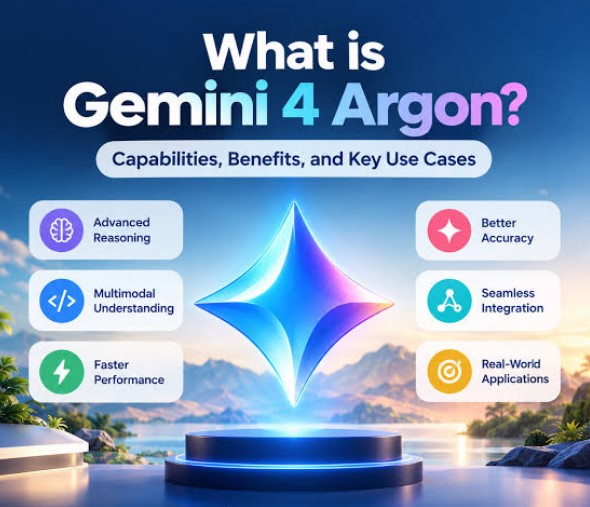
Google’s Gemini 4 Argon is part of this shift. Announced on October 13, 2026, the model is designed for demanding reasoning, complex software engineering, mathematical and scientific problem solving, and multi-step tasks. Developers can access it through Google’s Gemini API and AI Studio.
But the most interesting question is not simply how powerful an AI model is. It is how an entrepreneur can use it to solve a real business problem, attract paying customers, and build a company that earns recurring revenue.
For digital agencies such as Digineks and publishing platforms such as Blogy365, this creates opportunities worth exploring.
Read Also: Astra

In this guide, we will examine what Gemini 4 Argon can do, how an AI automation business could work, what it might cost to launch, and how content publishing can support long-term growth.
What Is Google Gemini 4 Argon?
Google Gemini 4 Argon is Google’s advanced reasoning model for complex technical and knowledge-based tasks. According to Google’s developer documentation, it supports a context window of approximately one million tokens, function calling, structured outputs, file search, code execution, and several other capabilities.
These features can help developers work with large amounts of information, build software, connect applications, and design workflows that involve several steps.
Official resources:
• Gemini 4 Argon model documentation
• Google’s introduction to Gemini 4 Argon
An important distinction is worth understanding. Gemini 4 Argon is an AI model, not a complete business operating system. A commercial product built around it may also need a website, database, messaging integrations, hosting, security controls, payment processing, and ongoing support.
Read Also: 15 AI Writing Tools
The model supplies part of the intelligence. The entrepreneur still has to create the product, identify customers, and deliver a useful service.
Why AI Automation Could Become a Business Opportunity

Consider a small clinic, property agency, consultancy, or professional services firm.
Customers contact the business through websites, email, social media, and messaging applications. Some enquiries receive immediate attention, while others wait until a staff member becomes available. Follow ups may be forgotten, appointment requests can get lost, and business owners may have little visibility into how many enquiries become customers.
Read Also: Human Vs AI
These problems are not unique to one industry.
An AI automation service can help businesses organize incoming enquiries, answer approved frequently asked questions, collect customer details, route requests to the right employee, and schedule follow ups.
The value is not the presence of AI itself. The value is helping a business respond more consistently and manage its sales process more effectively.
That is the opportunity Digineks could investigate.
The Digineks AI Business Model
Digineks already operates in the digital services space, with interests in website development, digital marketing, AI solutions, and business automation.
Rather than launching an entirely unrelated business, it could test a focused product called Digineks AI Lead Recovery and Booking Assistant.
The initial version would help small businesses manage enquiries and appointment requests through a structured workflow.
Its main features could include:
1. AI powered customer enquiries
A website assistant could answer common questions using information approved by the business, such as service descriptions, business hours, location, pricing policies, and contact details.
When a question requires a human decision, the assistant should route it to a member of staff rather than inventing an answer.
2. Lead capture and qualification
The system could collect a prospective customer’s name, contact details, service interest, and preferred appointment time.
With appropriate consent and access controls, these details could be recorded in a CRM or another approved business system.
3. Follow up automation
The system could help staff identify enquiries that need attention, send permitted reminders, and track whether a prospective customer has responded.
Automated messages must respect customer consent, messaging platform rules, and opt out requests.
4. Appointment requests
Customers could request an available appointment, receive confirmation after the booking is verified, and get reminders where permitted.
For clinics, the initial product should focus on administrative support. It should not diagnose conditions, recommend treatments, or make clinical decisions.
5. Simple performance reporting
A dashboard could show how many enquiries were received, how many were answered, how many appointments were requested, and which leads still need attention.
These metrics would help business owners evaluate whether the service is delivering measurable value.
How Gemini 4 Argon Could Help Build the Product
An entrepreneur does not necessarily need to begin by hiring a large development team.
A capable AI coding assistant can help plan the application, generate code, explain technical errors, draft database structures, write test cases, and document integrations.
A practical development process might look like this:
Step 1: Define the problem.
Write down exactly what the product should do, who will use it, and what success looks like.
Step 2: Design the workflow.
Map the journey from the first customer enquiry to the final booking or human handoff.
Step 3: Build a small prototype.
Create a basic website, enquiry form, lead dashboard, and one working automation. Do not attempt to build every feature at once.
Step 4: Connect the necessary services.
Use supported APIs for messaging, storage, scheduling, and payments where needed. Keep credentials secure and test integrations before launch.
Step 5: Test real scenarios.
Check incomplete enquiries, incorrect information, duplicate records, unavailable appointments, failed messages, and requests that need human attention.
Step 6: Launch a controlled pilot.
Run the system with one business, measure its performance, and correct problems before selling it widely.
Gemini 4 Argon can assist throughout this process, but generated code still requires review, security testing, and verification. AI does not eliminate the need for sound software engineering.
About Blogy365
Blogy365 explores digital publishing, AI tools, online business opportunities, technology, and practical ways to build an audience through useful content. Visit Blogy365.com for more articles and insights.
For businesses interested in AI-powered websites, lead management, and automation, visit Digineks.com.



1 Comment