


How a young programmer from Russia built a global technology empire, challenged conventional thinking, and turned a bold idea into a platform used by more than one billion people
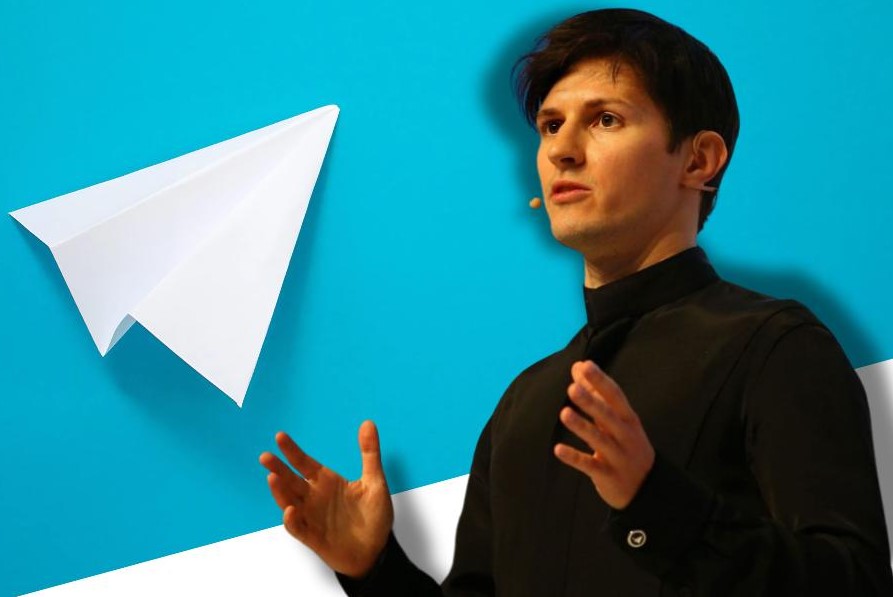
What does it take to build a technology company that reaches the entire world? Is it money, connections, a prestigious office, or simply being in the right place at the right time?
The story of Pavel Durov, the founder of Telegram, offers a different perspective. It is a story of technical curiosity, ambitious thinking, personal independence, calculated risks, and the determination to build something on your own terms.
Durov did not begin with Telegram. Before creating one of the world’s most widely used messaging platforms, he built another successful social network, experienced a bitter corporate conflict, and walked away from a business he had helped establish.
His journey offers valuable lessons for entrepreneurs, young professionals, technology enthusiasts, and anyone who dreams of building something meaningful.
Here is the story of the man behind Telegram, the decisions that shaped his success, and the lessons aspiring entrepreneurs can apply to their own lives.
The Early Life of Pavel Durov: A Mind Drawn to Technology
Pavel Durov was born on October 10, 1984, in Leningrad, now known as Saint Petersburg, Russia. He developed an interest in programming at a young age and eventually studied at Saint Petersburg State University.
Unlike entrepreneurs who discover technology later in their careers, Durov began exploring programming during his early years. His technical interests would become the foundation of his future businesses.
He was not simply interested in using the internet. He wanted to understand how digital products worked and how they could be built.
That distinction matters.

Many people consume technology. Fewer take the time to learn how to create it.
Durov’s early experience with programming, websites, and online communities helped him develop the skills he would later use to build businesses serving millions of people.
The first lesson is simple: build skills before chasing success. Money may create opportunities, but valuable skills help you recognize and use them.
Read Also: WhatsApp
VKontakte: The First Major Breakthrough
In 2006, Durov launched VKontakte, commonly known as VK, a social networking platform designed to connect students and other users online.
His original goal was practical. He wanted a place where university students and graduates could find one another and stay connected.
Instead of spending years waiting for the perfect opportunity, he began building.
According to Durov’s own account, he initially aimed to develop the social network in four weeks. The first version took approximately six weeks.
That early product became the foundation of a much larger business.
VK attracted users through social profiles, messaging, photo sharing, and features that encouraged people to invite their friends. The network grew rapidly and became a major social platform in Russia and neighboring markets.
Durov later described how building the first version forced him to handle multiple responsibilities, including programming, design, infrastructure, and product management.
His experience taught him how the different parts of a technology business fit together.
You can read his account of the company’s beginnings on his official Telegram channel.
The Entrepreneurial Lesson

You do not always need a completely original idea to build a successful company. You need to understand a real audience, solve a meaningful problem, and deliver a product people want to use.
Durov identified a need for online connection and built a product around it.
The same principle applies to a local service business, an online store, a software startup, or a digital agency.
Read Also: Musk’s Housing Solution
The Conflict That Changed His Career
Building a successful company does not guarantee that its founder will retain control of it.
As VK grew, Durov became involved in disputes over ownership, management, and government requests concerning user information.
He has said that he resisted demands to hand over information about Ukrainian protest organizers and faced pressure over the platform’s handling of opposition communities.
In 2014, Durov left VK and Russia. Telegram’s official press information describes his departure as a consequence of losing control of his previous company after refusing to hand over data requested by security agencies.
This became a defining turning point in his career.
Leaving a company he had helped build meant giving up a major part of his earlier entrepreneurial success. But it also gave him the opportunity to focus on a new venture.
The decision illustrates a difficult reality of business: building an asset and controlling its future are not always the same thing.
For founders, ownership structures, shareholder agreements, governance, and long term strategy can matter as much as product development.
The lesson in resilience
A setback does not have to end an entrepreneurial journey.
Sometimes it forces you to reconsider what you want to build, what you are willing to compromise, and what kind of future you want for your work.
The goal is not to romanticize every difficult decision. It is to learn from adversity and make the next decision with greater clarity.
Telegram: Turning a Bold Idea Into a Global Platform
Telegram was launched in 2013 by Pavel Durov and his brother Nikolai Durov.
Pavel focused on the product and business, while Nikolai contributed important technical expertise, including work on the underlying protocol.
The idea was to create a messaging service that emphasized speed, privacy, and reliable communication.
At the time, messaging apps were already competing for users. Telegram therefore needed more than a familiar chat interface. It needed a clear reason for people to try it and continue using it.
Its offering developed around several features:
• Cloud based messaging across multiple devices
• Large groups and public channels
• File sharing and communication tools
• Bots and automation capabilities
• Privacy controls and secret chats with end to end encryption
One important distinction deserves attention: Telegram’s regular cloud chats are not end to end encrypted by default. Its Secret Chats provide that additional encryption, so users should understand which type of conversation they are using.
Over time, Telegram expanded beyond personal messaging. Communities, publishers, creators, businesses, and developers began using it to distribute information and build audiences.
That evolution helped transform a messaging app into a broader digital platform.
You can explore its development through the official Telegram blog.
From Startup to More Than One Billion Monthly Users of Telegram
The scale of Telegram’s growth is remarkable.
According to Telegram’s official press information, the platform surpassed one billion monthly active users in 2025. It is also among the world’s most downloaded mobile applications.
That milestone demonstrates the scale of the audience Telegram has attracted since its launch in 2013.
But the deeper lesson is not simply that a messaging app became popular.
Telegram built a product that people could use in different ways. A student could communicate with friends. A publisher could distribute news. A creator could reach followers. A business could operate a customer support channel or build a community.
The platform’s usefulness extended beyond one narrow audience.
This is an important principle of scalable business: a product becomes more valuable when it serves a clear core need while supporting additional use cases without losing its identity.
For entrepreneurs, the question is worth considering:
Can your product solve one problem exceptionally well and still create opportunities to serve a much larger market?
Why Privacy Became Central to Telegram’s Identity
Telegram’s emphasis on privacy and independence has been a central part of its public identity.
Durov has repeatedly defended the principle that users should have greater control over their communications. The company’s history includes disputes with governments over access to user information and attempts to restrict the service.
These positions helped Telegram attract people who value independent communication.
However, the company’s approach has also attracted criticism and regulatory scrutiny. Large messaging platforms face difficult questions about illegal content, fraud, public safety, moderation, and accountability.
A fair assessment of Durov’s success must acknowledge both sides.
Protecting privacy is important. So is addressing harmful activity on a platform used by enormous numbers of people. These responsibilities can conflict, and technology companies must find workable ways to manage them.
For business leaders, the broader lesson is that a clear mission can differentiate a company, but maintaining trust requires more than a strong slogan. It requires decisions, policies, and practices that users can evaluate.
The Business Strategy Behind Telegram’s Growth
Telegram’s story offers several useful lessons in product strategy.
Solve a problem people already have
Communication is a universal need. Telegram entered a competitive market, but it offered an alternative for people looking for flexible messaging, large communities, and privacy features.
The lesson is to identify a real problem rather than invent demand for a product nobody needs.
Think beyond your local market
A digital service can potentially reach users across countries without opening a physical branch in every market.
Telegram’s global audience illustrates the opportunity available to companies that design products for international use.
That does not mean international growth is easy. Languages, regulations, infrastructure, payments, and customer expectations all matter. But digital products can offer a scale that traditional local businesses often find difficult to achieve.
Build a product people return to
A successful launch attracts attention. A useful product earns repeat usage.
Messaging, groups, channels, and other features give Telegram reasons to remain part of users’ daily routines.
Entrepreneurs should measure not only how many people try a product, but also how many return, recommend it, and find enough value to keep using it.
Treat monetization as part of the long term plan
Telegram introduced sponsored messages and later expanded its monetization options. Its broader ecosystem has also included premium subscriptions and other commercial features.
The strategic point is that a large audience creates opportunities, but audience size alone does not guarantee profitability.
Businesses still need sustainable revenue, manageable operating costs, and a model that supports continued development.
Understand the importance of technical talent
Telegram’s development also highlights the importance of complementary skills. Product vision, software engineering, infrastructure, security, and business management all contribute to a technology company’s success.
A founder does not have to master every discipline. But understanding how the pieces work together makes it easier to hire well, set priorities, and make informed decisions.
Five Lessons Entrepreneurs Can Learn From Pavel Durov
1️⃣ Start before everything feels perfect
Durov’s early experience with VK shows the value of building a working product rather than waiting indefinitely for ideal conditions.
Start with a manageable version, learn from users, and improve it.
2️⃣ Break ambitious goals into smaller tasks
In a personal account about building VK, Durov explained that a daunting project becomes easier when it is divided into smaller tasks and arranged in the right sequence.
This is a practical method for almost any ambitious goal.
A new entrepreneur does not need to build an entire company in one month. The first step might be to interview ten potential customers. The next might be to create a basic offer. After that, test whether someone is willing to pay for it.
Progress becomes easier to manage when the next action is clear.
3️⃣ Develop skills that give you independence
Programming helped Durov understand technology at a deeper level.
For today’s entrepreneurs, useful skills might include AI tools, sales, digital marketing, financial literacy, software development, or customer research.
You do not need to become an expert in everything. You do need enough knowledge to make better decisions.
4️⃣ Protect what makes your business valuable
A company’s product is only one part of its foundation. Ownership, customer relationships, intellectual property, data protection, and sound agreements can also determine its future.
Learn these lessons before a disagreement or crisis forces you to confront them.
5️⃣ Think globally, but execute one step at a time
International ambition is valuable when it is supported by practical execution.
Choose a specific audience, understand its needs, test your offer, and improve based on evidence.
A global vision without a working business model is just an aspiration. A small business with a repeatable model can become the starting point for something much larger.
What Aspiring Entrepreneurs Should Take Away From His Story
The most useful lesson from Durov’s career is not that every entrepreneur should imitate his personality or make the same decisions.
His path involved technical ability, timing, market demand, a capable team, major risks, and circumstances that cannot be reproduced exactly.
Instead, focus on principles you can apply more broadly.
Learn how things work. Build something useful. Listen to customers. Keep improving. Understand your ownership and financial position. And when circumstances change, be willing to reconsider your strategy.
You can apply these principles without building a billion-user messaging platform.
A freelancer can use them to create a specialized service. A small business owner can develop a better customer experience. A student can build a useful digital tool. A founder can turn a recurring customer problem into a software product.
The size of the first step matters less than whether it teaches you something valuable and moves you closer to a real solution.
Final Thoughts: Build Something That Matters
Pavel Durov’s journey from a young programmer to the founder of a global messaging platform is a reminder of what sustained ambition can accomplish.
He built VK, lost control of his first major company, and later developed Telegram with his brother. The platform eventually surpassed one billion monthly active users, according to its official press information.
His career also raises important questions about privacy, governance, moderation, and the responsibilities that come with operating technology at global scale.
That complexity makes the story more valuable, not less.
Entrepreneurship is rarely a straight line from idea to success. It involves tradeoffs, mistakes, difficult decisions, and the constant need to adapt.
You do not need to copy someone else’s journey to learn from it.
Start with a problem worth solving. Build the skills to solve it. Create something people value. Then keep improving it.
Your first project may be small. Your first customer may be one person. Your first version may be imperfect.
🔗 Recommended External Links
- Telegram official press information for verified company facts.
Telegram
- Pavel Durov’s official Telegram channel for his personal account of building VK and Telegram.
Telegram+1
- Reuters biography of Pavel Durov for independent reporting on his career.
Reuters
- Telegram official blog for product history and platform updates.
That is fine.
Every major business begins with work that is much smaller than the business it may eventually become.
If this story inspired you, share it with someone who dreams of building a business, learning technology, or creating something of their own.
For further insights, keep visiting blogy365.com



Leave a Comment