


There are moments in global economics that look small on the surface but quietly reshape everything. This is one of them. The idea of the Organization of the Petroleum Exporting Countries (OPEC) losing a key member like the United Arab Emirates is not just another headline. It is a signal. And markets pay attention to signals.
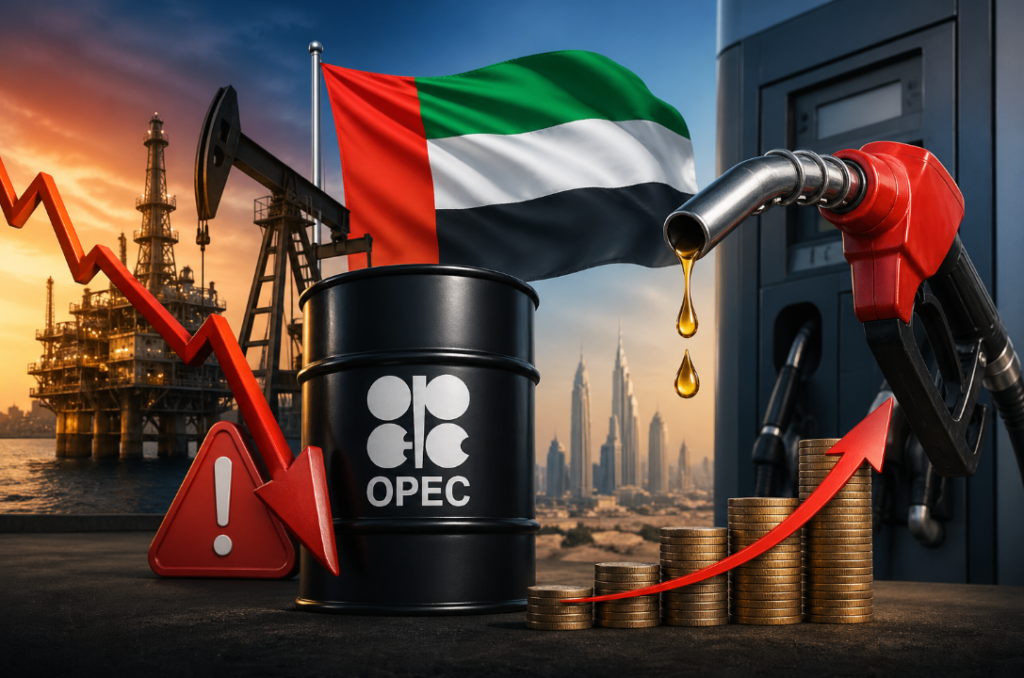
Let me explain what actually matters here. As OPEC.
🔎 What Just Happened And Why It Matters for OPEC
If a major oil-producing nation steps away from coordinated production policies, it gains freedom. Freedom to pump more oil. Freedom to price differently. Freedom to compete.

OPEC has always worked like a control system. Members agree on output limits to influence global oil prices. When a strong player like the UAE moves away from that structure, the balance starts shifting.
Here is the real implication. Oil markets thrive on coordination. Remove coordination, and volatility enters the room.
Read Also: The Real War is not only Oil
📉 Oil Prices Could Go Either Way. Here Is Why (OPEC)
At first glance, more oil in the market should mean lower prices. That is basic supply and demand. But the reality is more layered.
If the UAE increases production independently, prices may soften. But if other OPEC members respond by tightening supply to protect prices, the opposite can happen.
This creates a push and pull dynamic.
In simple terms
More supply pushes prices down
Strategic cuts push prices up
And when both happen together, prices become unpredictable.
🌐 The Bigger Game: Power Politics And Market Control
This is not just about oil. It is about influence.
OPEC has historically shaped global oil markets. A shift like this weakens collective control and strengthens individual strategy. Countries may start prioritizing national gains over group discipline.
That opens the door for price competition.
And yes, this is where things get uncomfortable for everyday people.
⛽ Will Countries Use This As An Excuse To Raise Fuel Prices
Here is the uncomfortable truth. Some governments will.
Oil pricing at the pump is not just about global crude prices. It includes taxes, subsidies, currency fluctuations, and internal policies.
So even if global prices drop slightly, local fuel prices might still rise.
Why
Governments often use global uncertainty to justify price increases
Fiscal pressures push countries to collect more revenue
Weak regulation allows overpricing
In regions with less transparency, this can lead to what people feel as economic pressure or even exploitation.
💸 Impact On Common People’s Daily Life Gets Expensive
Fuel is not just fuel. It touches everything.
Transport costs go up
Food prices follow
Electricity becomes more expensive
Businesses pass costs to consumers
So when oil markets shift, inflation follows quietly behind.
For countries already dealing with economic stress, this can tighten household budgets even further.
📊 What Smart Economies Will Do Next
This is where strategy matters.
Forward-thinking economies will
Diversify energy sources
Invest in renewables
Stabilize fuel pricing policies
Reduce dependency on imported oil
This shift may actually accelerate global movement toward alternative energy.
🚀 The Strategic Take: This Is Bigger Than Oil (OPEC)
This is not just about one country leaving a group. It is about the future of energy control.
Markets are moving from centralized control toward competitive independence. That means more volatility but also more opportunity.
If managed well, consumers could benefit from competition. If mismanaged, it becomes another burden on the public.
Bottom line
Watch policies, not just headlines
Watch local pricing, not just global oil
Watch government behavior, not just market trends
🔗 External References
Learn more about global oil policy from the International Energy Agency
Track oil market trends via the U.S. Energy Information Administration


Leave a Comment